The Complete Anti-Inflammatory Eating Guide for Women Over 40
Affiliate Disclosure: This article contains affiliate links. If you buy through our links, we may earn a small commission at no extra cost to you. We only recommend products we’d stand behind.
⚡ Quick Answer
This anti-inflammatory eating guide for women over 40 covers the complete framework: what chronic inflammation actually is, the twelve foods with the strongest evidence for reducing it, a practical daily eating template across all meals, a four-week implementation plan, and the lifestyle factors that determine whether the anti-inflammatory eating guide produces its full effect. Following this anti-inflammatory eating guide consistently for 8–12 weeks produces measurable reductions in CRP and IL-6 — the primary clinical markers of systemic inflammation.
What This Anti-Inflammatory Eating Guide Actually Addresses
Before applying this eating guide, understanding what inflammation actually is — and why the dietary component matters so much — provides the context that makes the recommendations meaningful rather than arbitrary.
Inflammation is the immune system’s defence response. Acute inflammation — the redness and swelling around a cut, the fever with a bacterial infection — is healthy and necessary. This eating guide does not target acute inflammation. What this eating guide addresses is chronic low-grade inflammation: a persistent, systemic activation of inflammatory pathways at levels too low to be felt day to day, but high enough to cause cumulative tissue damage, accelerate biological ageing, and significantly increase the risk of cardiovascular disease, metabolic dysfunction, cognitive decline, and autoimmune conditions over decades.
For women over 40, the anti-inflammatory eating guide addresses a specific vulnerability: declining oestrogen. Oestrogen suppresses NF-κB (the master regulator of the inflammatory response) and modulates the production of pro-inflammatory cytokines. As oestrogen levels fluctuate and decline through perimenopause, the body’s natural inflammatory regulation weakens. This guide provides the dietary tools to partially compensate for this loss — not as a replacement for medical care, but as a powerful evidence-based daily practice.
Every meal you eat either moves you toward or away from chronic inflammation. This guide gives you the framework to make that movement consistently positive.
Anti-Inflammatory Eating Guide: Understanding the Three Inflammatory Pathways Diet Addresses
This guide is structured around three biological mechanisms through which diet modulates inflammation:
- Omega-3 fatty acid pathway: EPA and DHA from oily fish, and ALA from flaxseed and walnuts, suppress NF-κB, reduce prostaglandin synthesis, and are metabolised into specialised pro-resolving mediators (SPMs) — resolvins and protectins — that actively resolve inflammatory processes. This pathway produces the most direct and measurable blood marker changes.
- Polyphenol pathway: compounds in berries, olive oil, green tea, dark chocolate, and colourful vegetables neutralise free radicals, modulate Nrf2 (the master antioxidant regulator), and directly suppress pro-inflammatory enzymes including COX-1, COX-2, and LOX. This pathway is the most diverse — different colours of produce provide different polyphenol families with distinct mechanisms.
- Gut microbiome pathway: fibre from legumes, vegetables, and whole grains feeds beneficial gut bacteria that produce short-chain fatty acids (SCFAs), primarily butyrate, propionate, and acetate. SCFAs have direct anti-inflammatory effects on the intestinal lining and throughout the body via the gut-immune axis. This pathway is often the most neglected, but research suggests it may be the most important for long-term outcomes.
This guide is most effective when all three pathways are covered at every meal — not just one or two. A salmon and quinoa bowl with leafy greens and olive oil covers all three. A bowl of pasta with tomato sauce covers only one. The guide meal planning section below shows how to hit all three pathways at every meal without complexity.
Anti-Inflammatory Eating Guide: The Core Foods
Highest Priority Anti-Inflammatory Eating Guide Foods
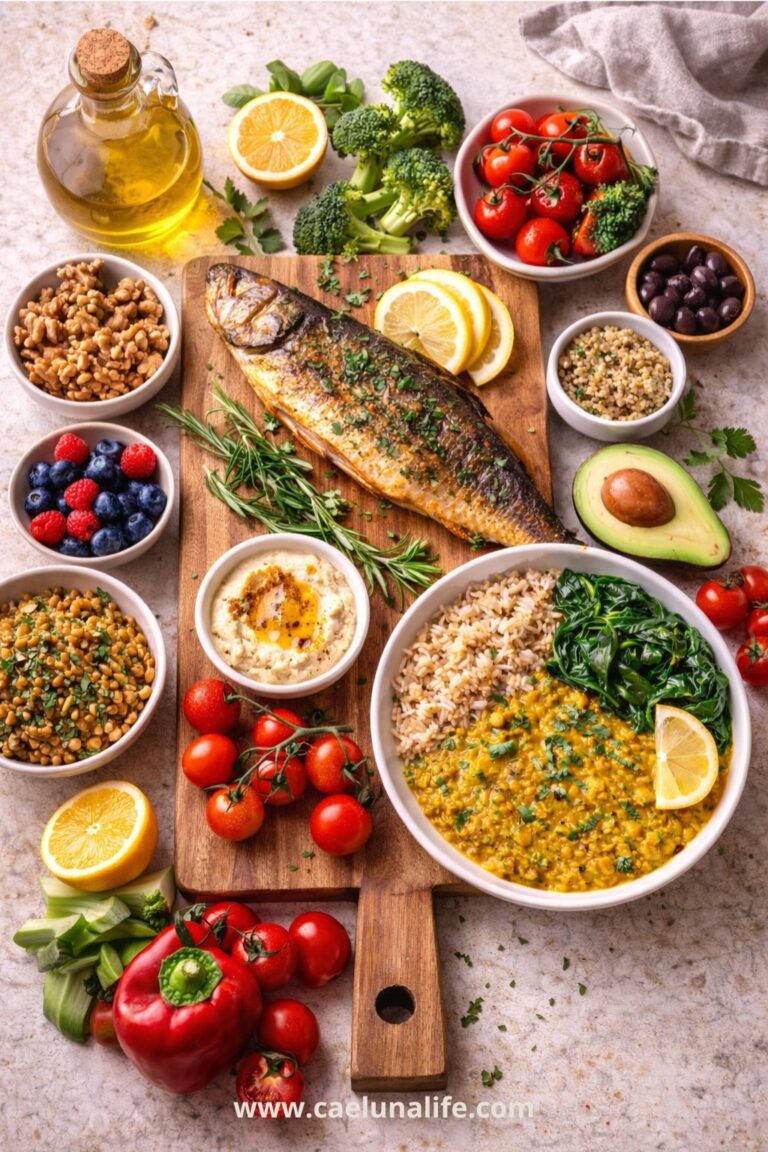
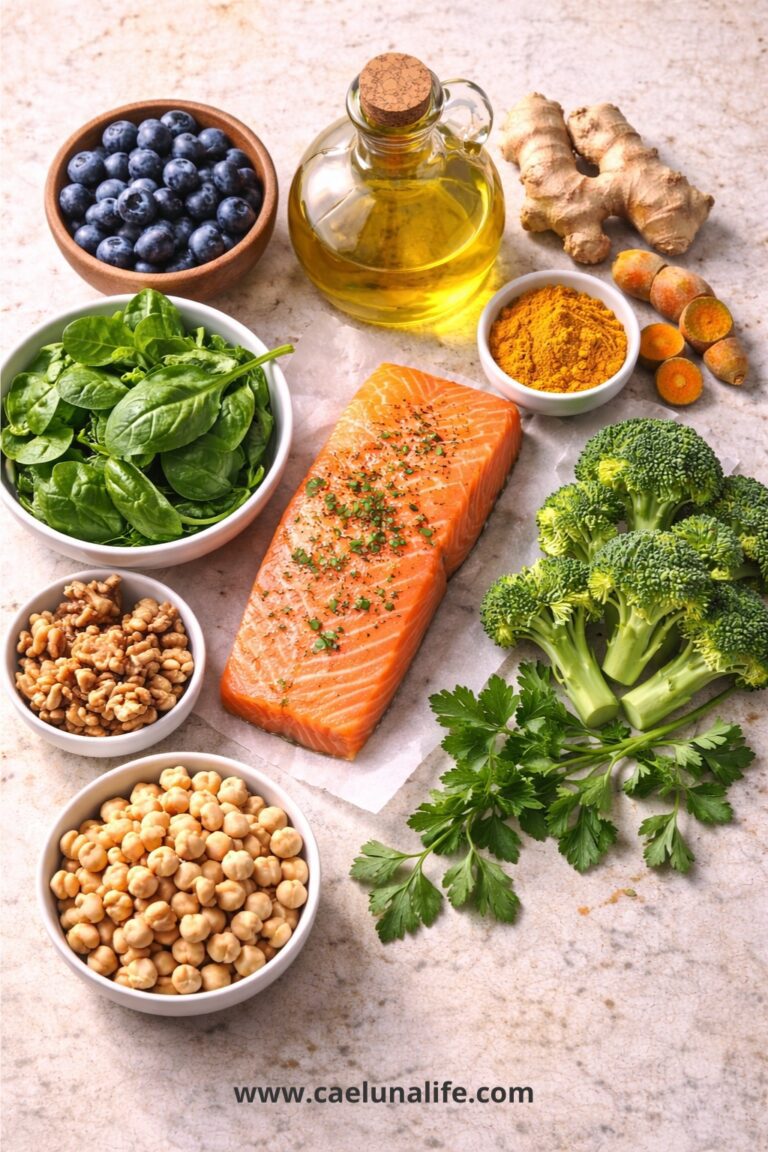
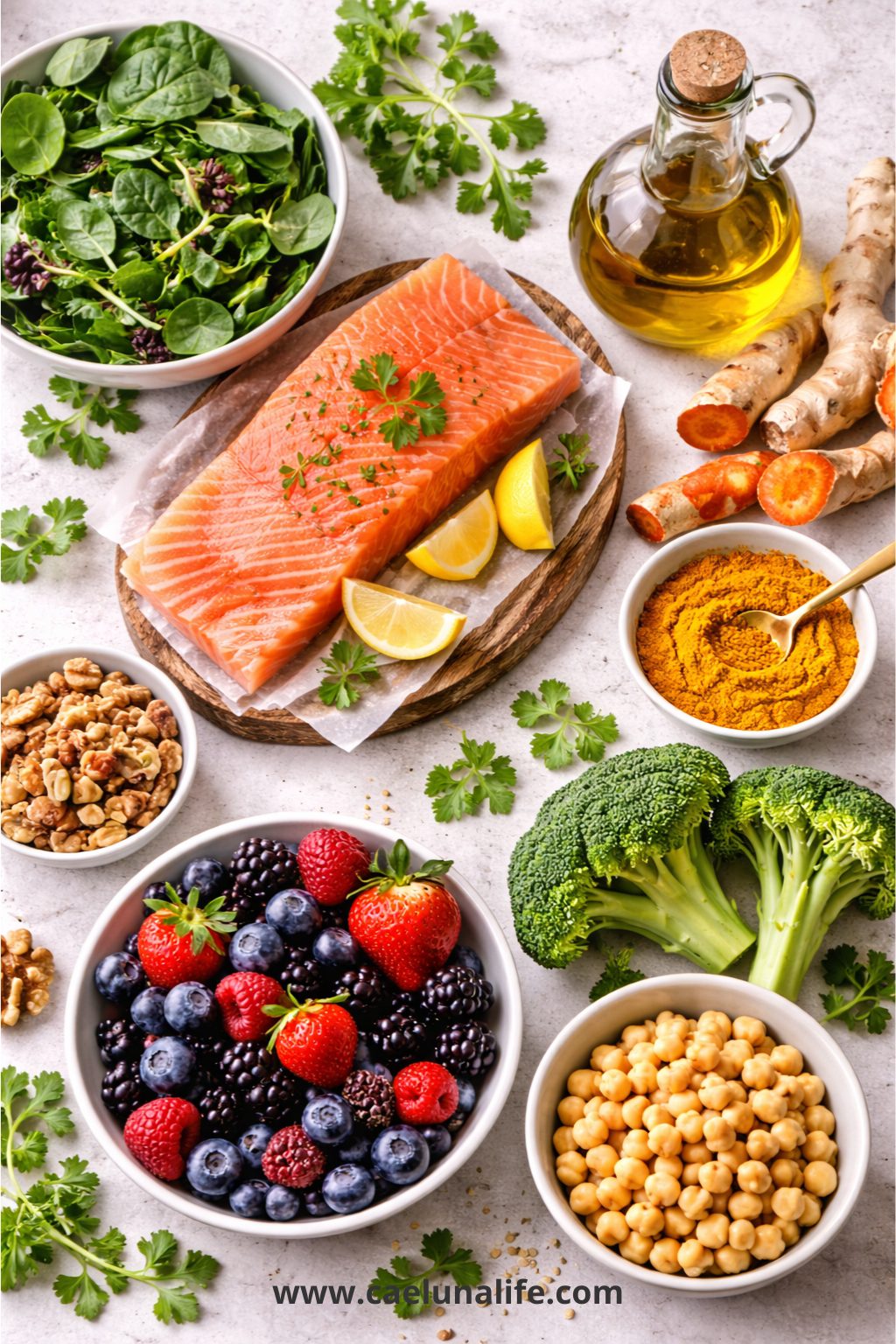
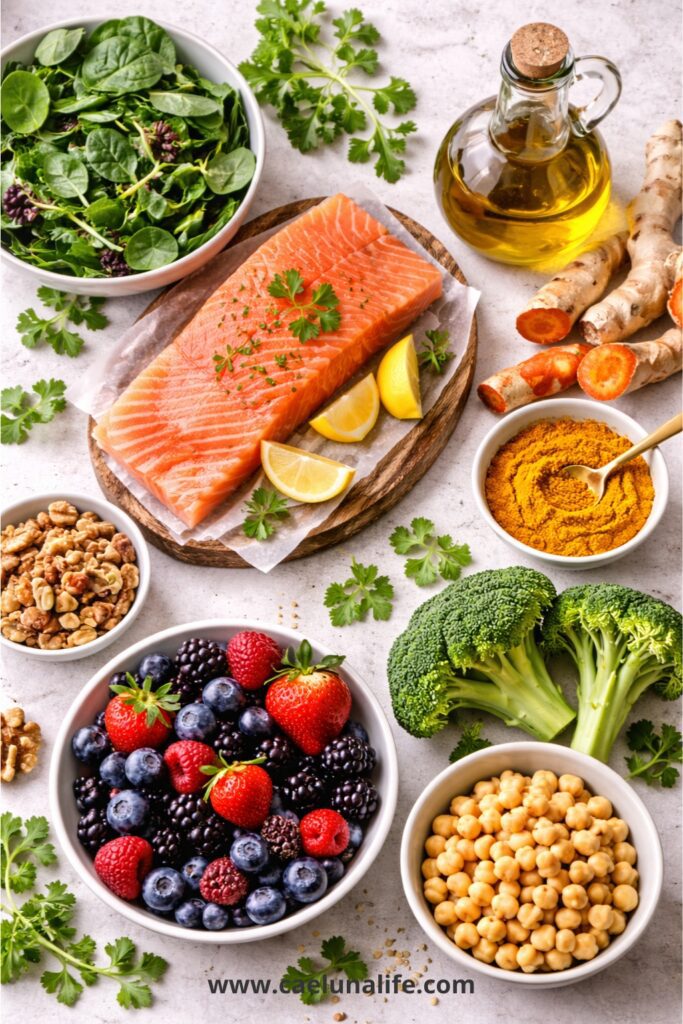
These foods have the most consistent and significant evidence across all three inflammatory pathways:
- Oily fish (salmon, mackerel, sardines, herring, anchovies): the highest-impact protein. EPA and DHA omega-3s directly suppress pro-inflammatory cytokines. Target: 2–3 servings per week minimum
- Extra-virgin olive oil: the primary fat. Oleocanthal, oleuropein, and oleic acid address the polyphenol pathway. Use generously at every meal — 2–3 tablespoons daily
- Leafy greens (spinach, kale, rocket, watercress): the most important daily vegetable. Vitamin K, folate, magnesium, and diverse polyphenols. Target: at least one large handful daily
- Berries (blueberries, cherries, raspberries, strawberries): the polyphenol source with the most consistent trial evidence. Anthocyanins reduce CRP and IL-6. Target: 80–100g daily
- Turmeric + black pepper: the most pharmacologically active spice. Curcumin inhibits NF-κB, but only when combined with piperine (black pepper) and fat. Always use together — this is non-negotiable in this guide
Secondary Anti-Inflammatory Foods
These foods provide important additional coverage across all three pathways:
- Ginger: 6-gingerol and 6-shogaol inhibit COX-2. Pair with turmeric in every recipe that uses one
- Walnuts: ALA omega-3s plus ellagitannins that convert to urolithins — longevity-associated compounds. Daily handful (30g) in this eating guide
- Legumes (lentils, chickpeas, black beans): the most important gut pathway food. Fibre, resistant starch, and plant protein. Target: 4–5 times per week
- Cruciferous vegetables (broccoli, cauliflower, Brussels sprouts): sulforaphane activates Nrf2. Lightly steam rather than boil to preserve this compound
- Green tea: EGCG polyphenol with consistent anti-inflammatory trial evidence. 2–3 cups daily in this guide
- Fermented foods (Greek yoghurt, kefir, miso, kimchi): live bacteria that support the gut microbiome — the gut pathway foundation
- Dark chocolate 70%+: cocoa flavanols reduce oxidative stress and CRP. 20–30g daily fits within this guide as a snack or recipe ingredient
Anti-Inflammatory Eating Guide: Foods to Reduce
This eating guide is as much about consistent reduction as consistent addition. These food categories reliably amplify the inflammatory pathways this guide targets:
- Ultra-processed foods: additives, emulsifiers, and refined starches activate NF-κB and disrupt gut microbiome diversity — the primary exclusion category
- Added sugar: fructose drives advanced glycation end product (AGE) formation and directly raises CRP. The guide treats added sugar as the single most important food to reduce
- Refined vegetable oils in excess: high omega-6 fatty acids tip the omega-6:omega-3 ratio toward inflammation. This guide replaces corn, soybean, and sunflower oils with extra-virgin olive oil
- Processed meats (salami, hot dogs, bacon in large quantities): linked to elevated CRP and IL-6 in cohort studies. The eating guide allows occasional inclusion but not daily consumption
- Alcohol: increases intestinal permeability, disrupts the gut microbiome, and raises inflammatory markers. This guide recommends significant reduction
Anti-Inflammatory Eating Guide: Daily Meal Templates
Breakfast Templates
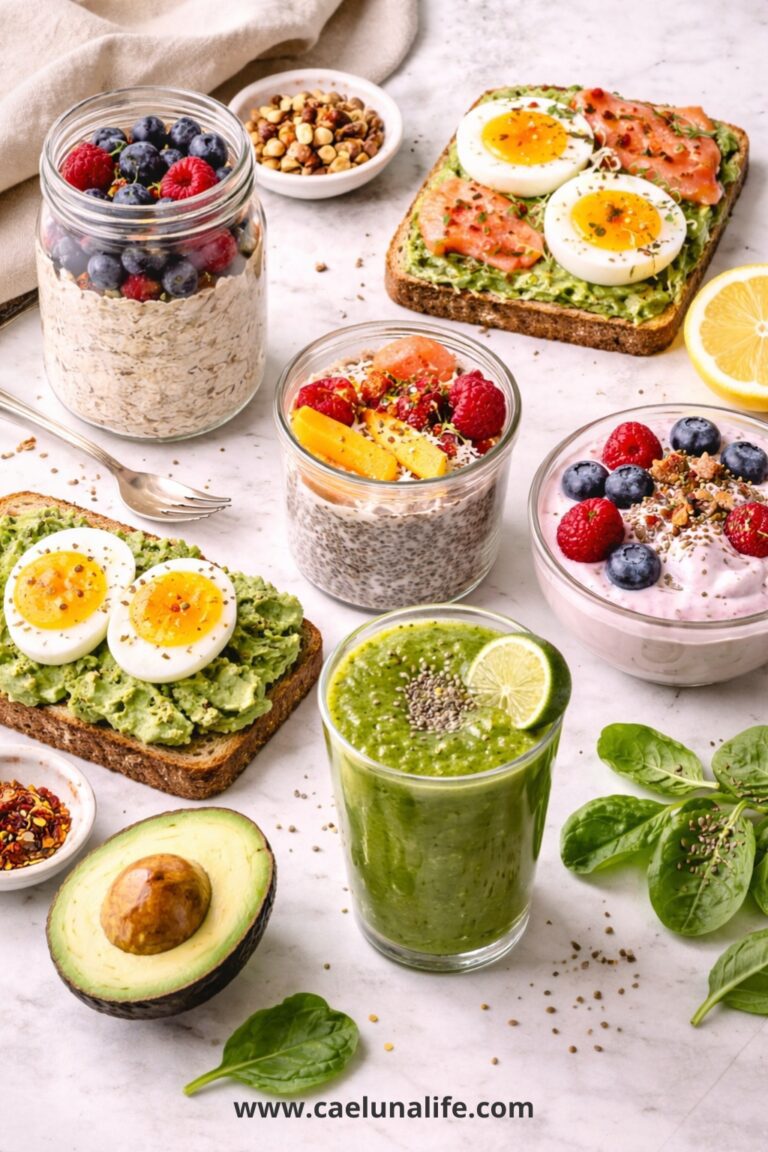
Every breakfast should cover at minimum: protein (20g+), one polyphenol source, one fibre source. Here are five breakfast options that meet all criteria:
- Option 1 — Overnight oats (25g protein): 40g oats, 150g Greek yoghurt, oat milk, 1 tbsp ground flaxseed, 1 tsp chia seeds, cinnamon. Top with frozen blueberries and walnuts. The most convenient breakfast
- Option 2 — Eggs with greens (22g protein): 3 scrambled eggs with sautéed spinach, half tsp turmeric, black pepper, and olive oil. Serves with rye toast. Anti-inflammatory eating guide combination with curcumin
- Option 3 — Green smoothie (24g protein): frozen spinach, frozen blueberries, 150g Greek yoghurt, 1 tbsp ground flaxseed, oat milk. Blend. Zero preparation beyond blending for this breakfast
- Option 4 — Smoked salmon plate (28g protein): 100g smoked salmon, half avocado, rye crackers, cucumber, capers, fresh dill. The highest omega-3 breakfast option
- Option 5 — Chia pudding (20g protein): 3 tbsp chia seeds in 250ml oat milk overnight. Top with berries, walnuts, and a teaspoon of maca. Add 150g Greek yoghurt for protein. For those who prefer cold food
🛒 Recommended: Organic Ground Flaxseed cold-milled — The most versatile daily ingredient — omega-3s, fibre, and phytoestrogens in every tablespoon
Lunch Templates
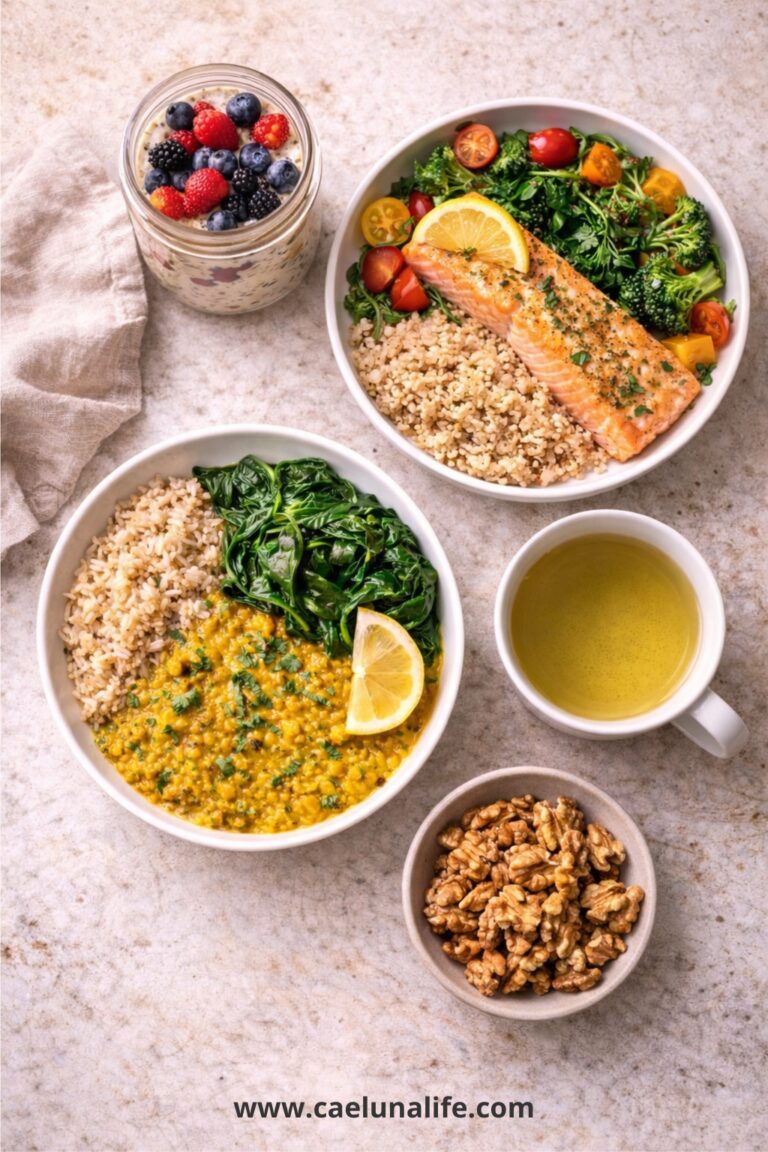
Lunches should cover the omega-3 or polyphenol pathway through protein, and the gut pathway through vegetables and legumes. These lunch templates cover all three mechanisms:
- Option 1 — Salmon grain bowl (35g protein): roasted or tinned salmon over quinoa with spinach, roasted broccoli, cherry tomatoes, olive oil and lemon dressing. The signature lunch
- Option 2 — Sardine and chickpea salad (28g protein): tinned sardines over mixed leaves with chickpeas, cucumber, tomatoes, olive oil, lemon, and capers. Five minutes, no cooking, three pathways covered
- Option 3 — Lentil soup (26g protein with bread): prepped Sunday, reheated in minutes. Red lentils with turmeric, ginger, garlic, and tinned tomatoes. Add rye bread for complete lunch
Dinner Templates
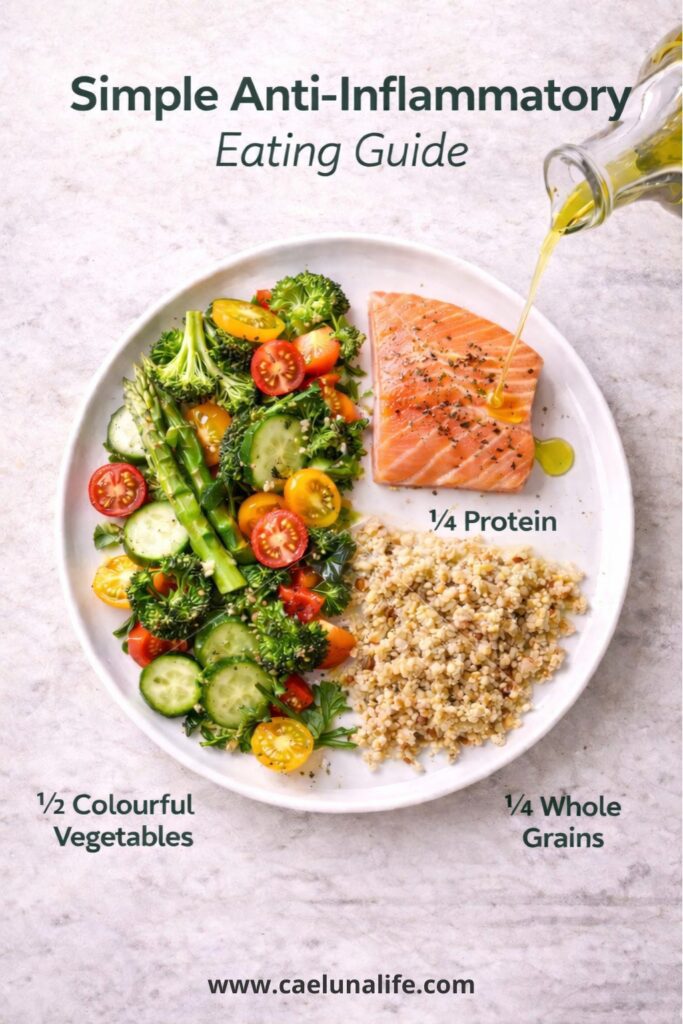
This guide recommends building dinners around vegetables (two handfuls minimum) with a protein source and a smaller whole-grain carbohydrate portion:
- Option 1 — Mediterranean salmon (32g protein): baked salmon with roasted courgette, cherry tomatoes, and asparagus in olive oil and garlic. Brown rice or quinoa alongside. Classic dinner
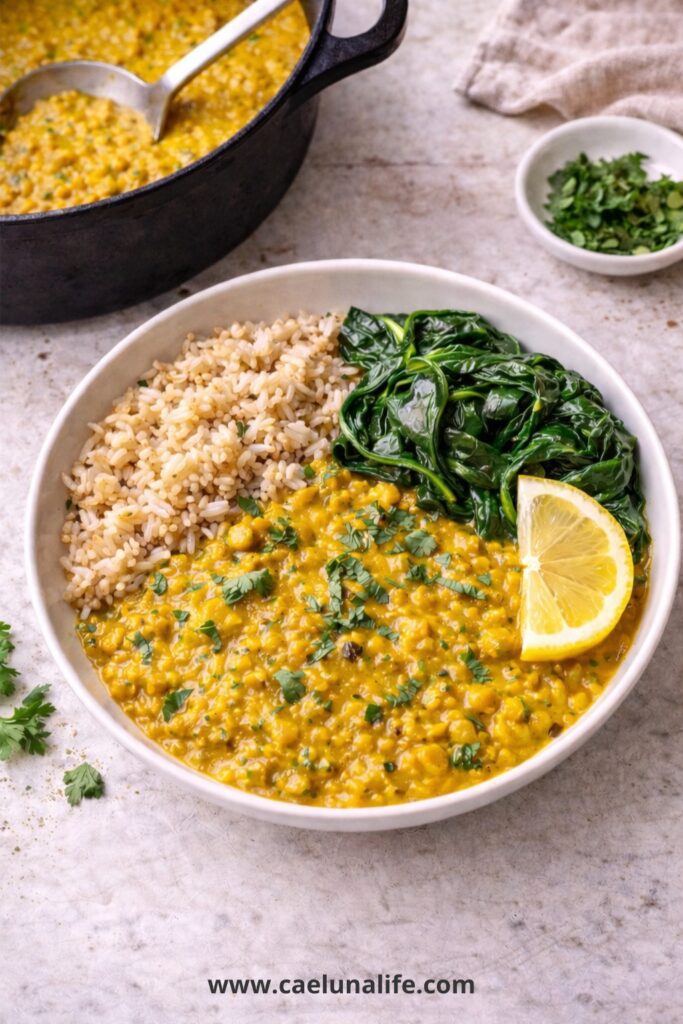
- Option 2 — Turmeric lentil dal (22g protein): red lentils with turmeric, ginger, garlic, coconut milk, and tomatoes. Serve over brown rice with wilted spinach. Covers all three pathways intensely
- Option 3 — Ginger miso chicken (30g protein): chicken thighs marinated in miso, ginger, sesame oil, and garlic. Roast and serve with steamed broccoli and brown rice. The fermented miso adds the gut pathway
Four-Week Implementation Plan
Week 1 : Oil and Fish
The two changes with the most immediate and measurable impact in this anti-inflammatory eating guide: replace all cooking oils with extra-virgin olive oil, and add oily fish (sardines, salmon, mackerel) twice this week. These two changes alone address both the polyphenol and omega-3 pathways of the anti-inflammatory eating guide and produce measurable blood marker improvements within 4–6 weeks.
Week 2 : Berries and Greens Daily
This week of the anti-inflammatory eating guide: add berries to breakfast every day (80–100g frozen is sufficient and cost-effective), and include at least one large handful of leafy greens at lunch and dinner. These anti-inflammatory eating guide additions provide daily anthocyanin and vitamin K intake — two of the most consistently anti-inflammatory food compounds.
Week 3 : Legumes Four Times
This week focuses on fibre and the gut pathway. Include legumes — lentils, chickpeas, black beans, or edamame — four times during the week. A lentil soup, a chickpea salad, an edamame snack, and a bean-based dinner covers this anti-inflammatory eating guide target with minimal extra effort if these are already staple ingredients.
Week 4 : Turmeric, Ginger, Green Tea Daily
The final week of the anti-inflammatory eating guide baseline: add turmeric and ginger to at least one meal daily (with black pepper and fat), and begin drinking 2 cups of green tea daily. By the end of week four of this anti-inflammatory eating guide, all four primary anti-inflammatory mechanisms — omega-3s, polyphenols, fibre, and targeted phytochemicals — will be consistently addressed.
🛒 Recommended: Anti-Inflammatory Diet Meal Prep by Ginger Hultin RDN — Best cookbook for implementing this anti-inflammatory eating guide — 28-day plan with batch-cooking system
Anti-Inflammatory Eating Guide: Tracking Progress
This anti-inflammatory eating guide produces measurable results that you can track objectively. The primary blood marker is CRP (C-reactive protein) — a standard inflammation marker available from your GP as part of routine blood work. Request a baseline CRP before starting this anti-inflammatory eating guide, and a repeat at 12 weeks.
Target CRP ranges: below 1 mg/L indicates low inflammatory risk; 1–3 mg/L is where this anti-inflammatory eating guide produces the most benefit; above 3 mg/L indicates elevated inflammation that warrants both this anti-inflammatory eating guide and medical evaluation.
Subjective progress markers from this anti-inflammatory eating guide: improved morning joint mobility (often first to change), more sustained energy without afternoon crashes, better sleep quality, improved digestive regularity, and reduced frequency of headaches or minor illness. These typically appear 2–4 weeks into this anti-inflammatory eating guide before blood markers change.
Anti-Inflammatory Eating Guide: Lifestyle Factors
This anti-inflammatory eating guide is most effective alongside — and cannot fully compensate for — these supporting factors:
- Sleep (7–9 hours consistently): poor sleep is one of the most powerful drivers of systemic inflammation. One night of poor sleep can raise CRP to levels that take a week of this anti-inflammatory eating guide to recover
- Regular movement: moderate exercise reduces CRP and IL-6 independently of diet. Combining this anti-inflammatory eating guide with 3–5 weekly movement sessions produces substantially greater results than either alone
- Stress management: chronic psychological stress elevates cortisol, which chronically drives inflammatory pathways. This anti-inflammatory eating guide addresses only the dietary component of inflammation — stress management addresses a parallel one
Key Tips From This Anti-Inflammatory Eating Guide
- Always use turmeric with black pepper and a fat — without this trinity, the curcumin in this anti-inflammatory eating guide’s most potent spice is negligible
- Eat leafy greens with olive oil or avocado — fat is required for polyphenol and vitamin K absorption from these anti-inflammatory eating guide staples
- Choose frozen berries — they are nutritionally equivalent to fresh and remove the cost barrier to daily anti-inflammatory eating guide compliance
- Batch-cook on Sunday — this anti-inflammatory eating guide is effortless when compliant food is already prepared and waiting
- Prioritise consistency over perfection — 80% adherence to this anti-inflammatory eating guide sustained over months outperforms 100% adherence for two weeks followed by abandonment
Frequently Asked Questions About This Anti-Inflammatory Eating Guide
How long before this anti-inflammatory eating guide produces results?
Subjective improvements from this anti-inflammatory eating guide — reduced joint stiffness, better energy, improved digestion — often within 2–4 weeks. Blood marker improvements (CRP reduction) typically at 8–12 weeks of consistent anti-inflammatory eating guide adherence. Long-term benefits — cardiovascular, cognitive, metabolic — accumulate over years. The anti-inflammatory eating guide is a long game.
Is this anti-inflammatory eating guide suitable during perimenopause?
This anti-inflammatory eating guide is specifically designed with perimenopause in mind. The phytoestrogen-rich foods (flaxseed, miso, edamame) and magnesium-dense ingredients (spinach, pumpkin seeds, dark chocolate) directly support perimenopausal biology. Many women following this anti-inflammatory eating guide report reduced joint pain, improved sleep, and more stable mood within 4–8 weeks.
Can I follow this anti-inflammatory eating guide as a vegetarian or vegan?
Yes. Replace the oily fish component of this anti-inflammatory eating guide with algae-based DHA/EPA supplements (the same long-chain omega-3s without fish), and ensure walnuts and flaxseed are daily staples for ALA. The legume, vegetable, and whole-grain components of this anti-inflammatory eating guide are naturally suited to plant-based eating. B12 supplementation is essential for vegans following this anti-inflammatory eating guide.
Does this anti-inflammatory eating guide require supplements?
This anti-inflammatory eating guide is built around food first. Supplements that complement it: omega-3 fish oil (if fish intake is below twice weekly), vitamin D3 with K2 (hard to obtain from food alone), magnesium glycinate (many women are functionally deficient). These are additions to this anti-inflammatory eating guide, not substitutes.
What is the single most impactful change from this anti-inflammatory eating guide?
For most women, adding oily fish twice per week is the highest-impact single change in this anti-inflammatory eating guide — because most Western women are significantly deficient in EPA and DHA, and these compounds have the most direct and measurable effects on inflammatory markers of any food intervention. The second most impactful anti-inflammatory eating guide change is switching to extra-virgin olive oil as the primary cooking fat, because it addresses the polyphenol pathway daily at every meal.
Related Articles
These guides connect directly with what you have just read:
- Best Anti-Inflammatory Foods to Add to Your Diet After 40 — The specific foods at the centre of this anti-inflammatory eating guide — each one explained in detail.
- What Is the Anti-Inflammatory Diet and Does It Actually Work? — The science behind the dietary pattern this anti-inflammatory eating guide is built on.
- 30 Anti-Inflammatory Breakfast Ideas That Actually Keep You Full — Expand the breakfast section of this anti-inflammatory eating guide with 30 practical options.
- 7 Anti-Inflammatory Meal Prep Recipes to Make Every Sunday — Batch-cook this anti-inflammatory eating guide’s meals for the whole week in one session.
- How to Eat Healthy After 40 — What Actually Changes and Why — The broader midlife nutrition context that this anti-inflammatory eating guide fits into.