What to Eat in a Week Healthy as a Woman Over 40 — Realistic Meal Plan
Affiliate Disclosure: This article contains affiliate links. If you buy through our links, we may earn a small commission at no extra cost to you. We only recommend products we’d stand behind.
⚡ Quick Answer
What to eat in a week healthy as a woman over 40 centres on three non-negotiables: at least 25–30g protein per meal, varied colourful vegetables daily, and healthy fats from olive oil, nuts, and oily fish. This guide gives you a complete day-by-day plan of what to eat in a week healthy, tailored to the metabolic and hormonal changes that come with midlife.
Why What to Eat in a Week Healthy Looks Different After 40
Knowing what to eat in a week healthy as a woman over 40 requires understanding what actually changes after 40 — and what does not. Oestrogen levels begin fluctuating, which affects fat storage patterns, carbohydrate processing, and bone density maintenance. Muscle mass declines gradually unless actively supported through dietary protein and resistance exercise.
None of this means you need a restrictive diet or a complicated plan for what to eat in a week healthy. What it does mean is that protein, calcium, magnesium, vitamin D, and fibre deserve more attention than they may have in your twenties. The foods that serve these needs are genuinely satisfying and varied — planning what to eat in a week healthy around them feels abundant, not depriving.
The Nutritional Framework: What to Build Every Healthy Week Around
Protein — The Most Important Piece of What to Eat in a Week Healthy
Current research points toward 1.2–1.6g of protein per kilogram of bodyweight daily for women over 40 — significantly above the long-standing minimum RDA. When planning what to eat in a week healthy, aim for 25–35g protein at each main meal.
- Best sources: eggs, Greek yoghurt, salmon, chicken thighs, lentils, tempeh, cottage cheese, edamame
Calcium and Vitamin D
Bone density loss accelerates in perimenopause. When deciding what to eat in a week healthy, include calcium-rich foods (dairy, sardines with bones, leafy greens, tofu) daily. Vitamin D from food alone is rarely sufficient — a D3 + K2 supplement fills this gap for most women.
Magnesium
Magnesium is involved in over 300 enzymatic processes and affects sleep, muscle function, mood, and blood sugar. Many women are functionally deficient. Include pumpkin seeds, dark chocolate, spinach, almonds, and black beans regularly in what to eat in a week healthy.
Fibre
Gut health becomes increasingly important after 40. Aim for 25–35g fibre per day from varied plant sources — legumes, vegetables, whole grains, and fruit. This is one of the most impactful elements of what to eat in a week healthy for long-term outcomes.
What to Eat in a Week Healthy — Day by Day
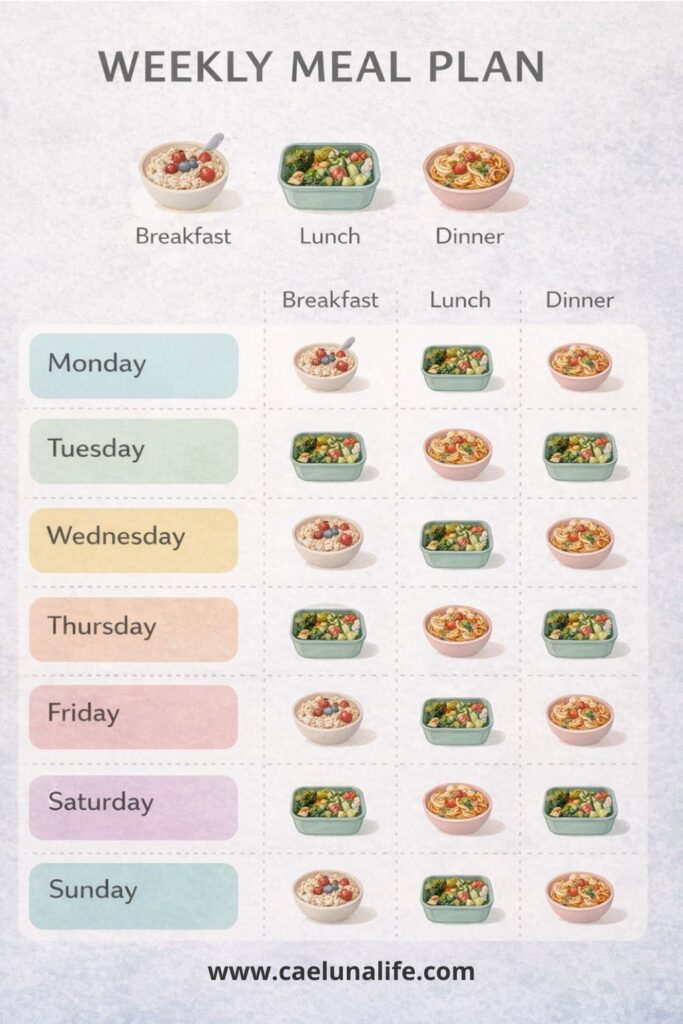
Monday — Start Strong
Breakfast (26g protein): Greek yoghurt (200g full-fat) with mixed berries, ground flaxseed, and walnuts. High protein, omega-3s from flax, calcium from yoghurt.
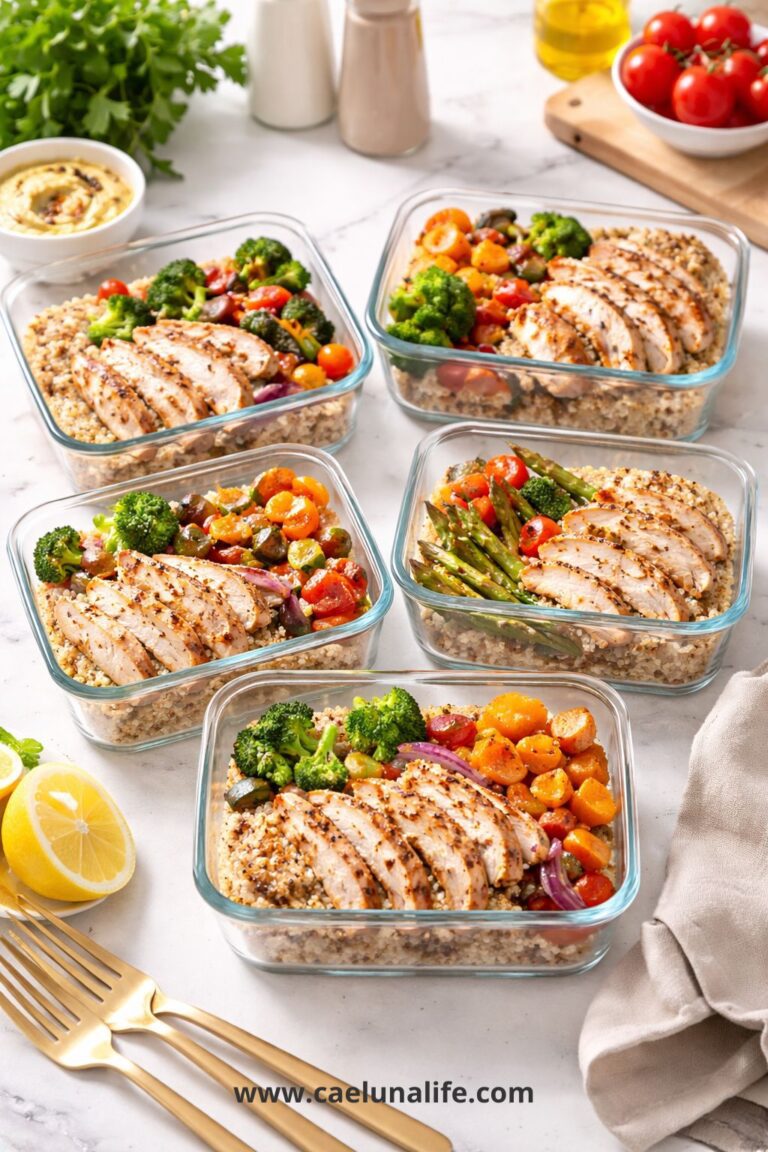
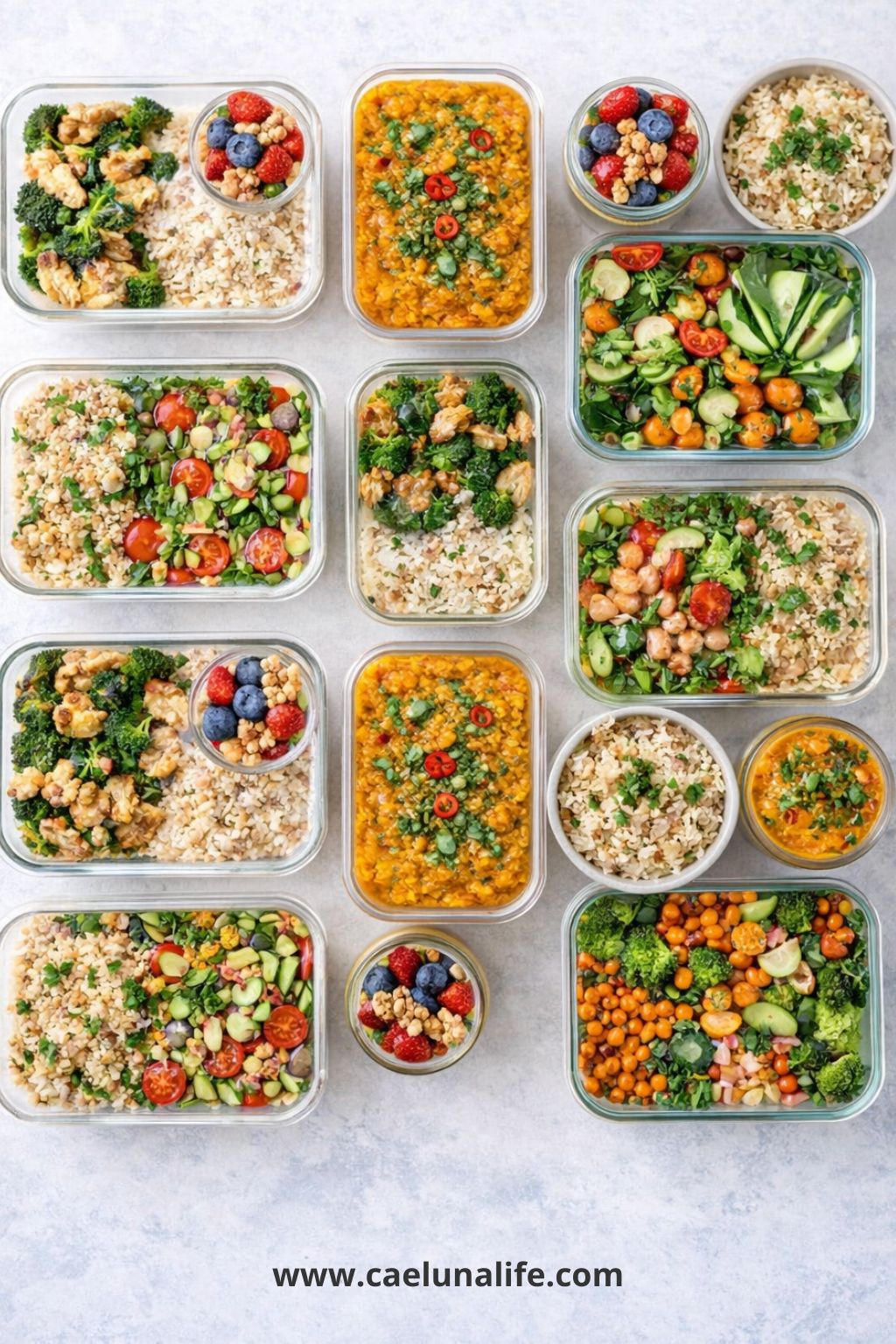
Lunch (35g protein): Salmon and quinoa bowl with roasted broccoli and tahini dressing. If prepped Sunday, assembly takes 2 minutes.
Dinner (30g protein): Roasted chicken thighs with sweet potato and broccoli. Season with garlic, lemon, and smoked paprika.
Snack: A small handful of almonds and an apple — fibre and healthy fats.
Tuesday — Midweek Momentum
Breakfast (28g protein): Overnight oats with chia seeds, oat milk, cinnamon, and banana. Prepared Sunday — zero morning effort.
Lunch (28g protein): Lentil and vegetable soup with a slice of rye bread. Plant protein, fibre, anti-inflammatory spices.
Dinner (30g protein): Baked cod with olive oil, capers, and herbs, served with steamed green beans and brown rice.
Snack: Hummus with carrot and celery sticks. Fibre-rich and satisfying.
Wednesday — Midpoint
Breakfast (28g protein): Two scrambled eggs with sautéed spinach and half an avocado on rye toast. This is what to eat in a week healthy at its most practical.
Lunch (26g protein): Chickpea and feta salad with cucumber, tomato, olives, and olive oil dressing. No reheating required.
Dinner (28g protein): Stir-fried tofu with edamame, broccoli, and brown rice in a ginger-sesame sauce.
Snack: Dark chocolate (70%+) with pumpkin seeds. Magnesium-rich and genuinely satisfying.
Thursday — Building Towards the End
Breakfast (26g protein): Green smoothie: spinach, frozen berries, banana, Greek yoghurt, and almond milk. Fast and nutrient-dense.
Lunch (30g protein): Grain bowl with farro, roasted vegetables, soft-boiled egg, and green tahini dressing.
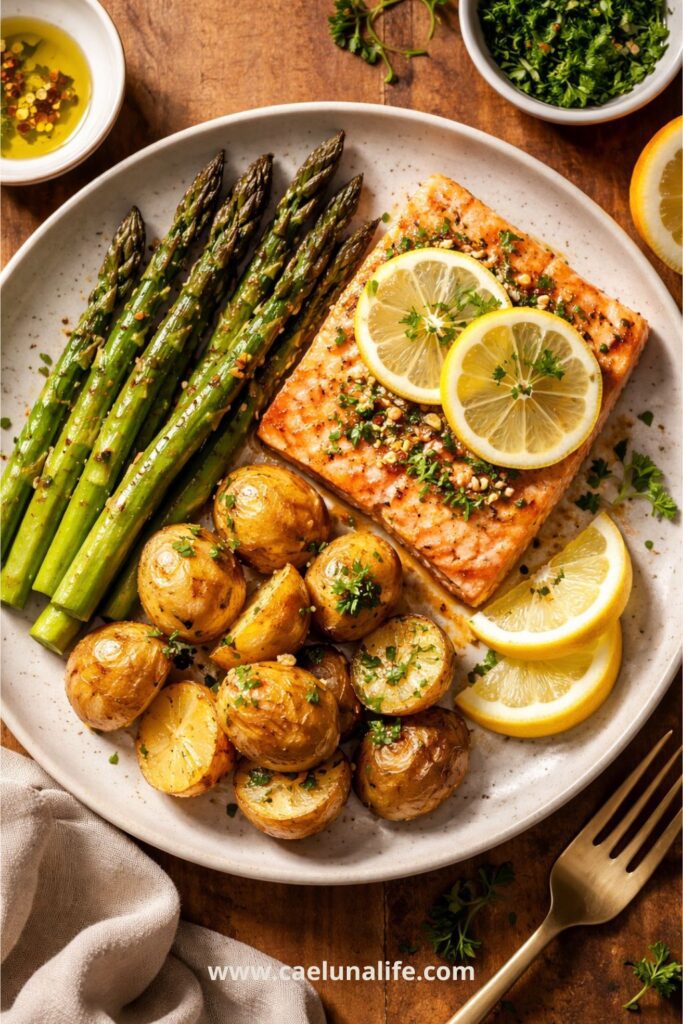
Dinner (30g protein): Salmon with roasted asparagus and new potatoes. Dress with lemon and dill.
Snack: Full-fat cottage cheese with cherry tomatoes and a drizzle of olive oil.
Friday — End the Week Well
Breakfast (22g protein): Chia pudding with full-fat coconut milk, topped with mango and toasted coconut. Prep Thursday evening.
Lunch (28g protein): Leftover lentil dal with brown rice and cucumber raita.
Dinner (30g protein): Baked chicken with a large green salad and roasted root vegetables.
Snack: Banana with a tablespoon of almond butter.
Saturday and Sunday — Relaxed and Flexible
Weekends are where what to eat in a week healthy becomes more social and spontaneous while staying broadly within the same principles:
- Saturday brunch: vegetable omelette, mixed salad, sourdough
- Saturday dinner: homemade fish tacos with avocado and slaw — what to eat in a week healthy does not mean boring
- Sunday: a larger batch-cook session that doubles as your prep for the following week
Foods to Include Consistently in What to Eat in a Week Healthy
- Oily fish (salmon, mackerel, sardines) — 2+ portions per week
- Eggs — 5–7 per week for most healthy women
- Dark leafy greens (spinach, kale, watercress) — daily where possible
- Legumes (lentils, chickpeas, black beans) — 4–5 times per week
- Berries — fresh or frozen, daily is ideal
- Extra-virgin olive oil — primary cooking fat
- Nuts and seeds — a small daily handful
🛒 Recommended: Organic Chia Seeds (1,36 kg bag) — Versatile weekly healthy eating staple — omega-3s, fibre, protein in every tablespoon
What to Limit in a Healthy Week of Eating
Planning what to eat in a week healthy is also about what to reduce — not eliminate. The overall pattern matters far more than individual choices:
- Ultra-processed foods (packaged snacks, fast food, sugary cereals)
- Added sugar, particularly in drinks and sauces
- Refined carbohydrates without protein or fibre to balance them
- Alcohol — even moderate amounts affect sleep, hormonal balance, and inflammation markers
Key Tips for Sticking to a Healthy Week of Eating
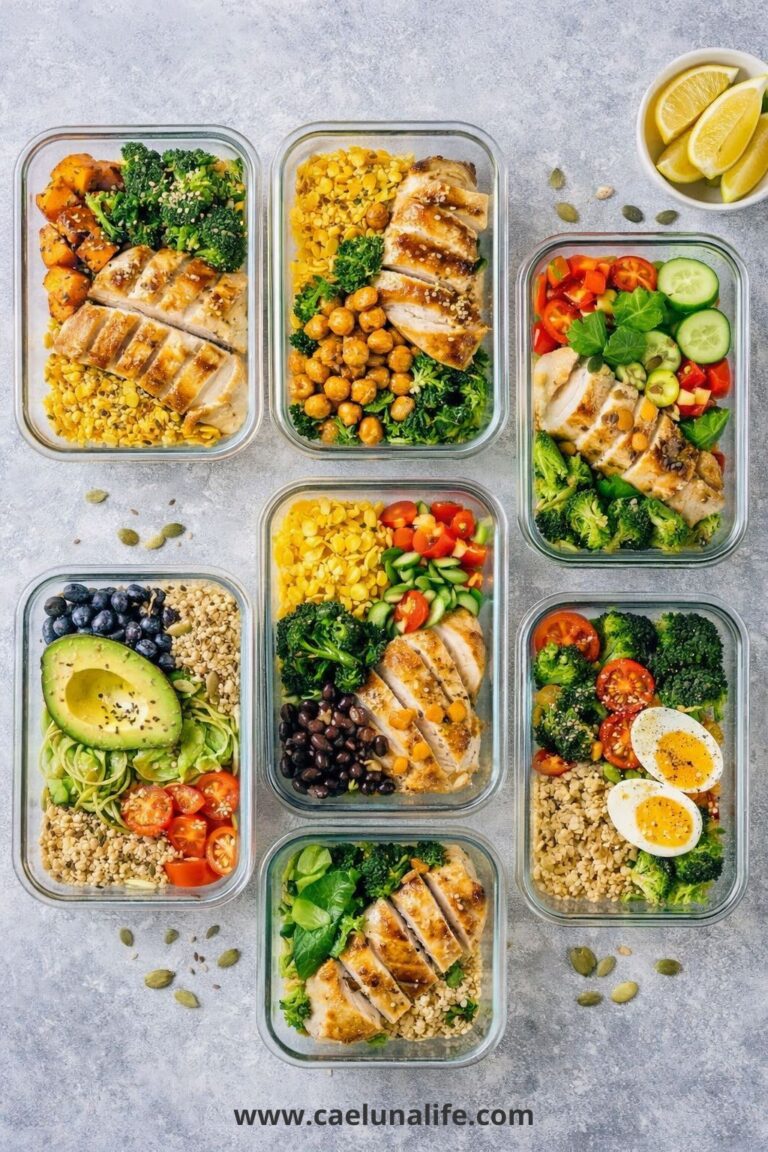
- Prep protein on Sunday — having ready-to-use chicken, boiled eggs, or cooked lentils is the single most impactful step in what to eat in a week healthy
- Eat protein at breakfast — this supports satiety and stabilises blood sugar all day
- Do not skip meals when busy — low blood sugar leads to reactive eating, the main enemy of what to eat in a week healthy
- Plan what to eat in a week healthy on Friday, shop Saturday, prep Sunday — a reliable 3-day rhythm
- Give yourself one genuinely free meal per week — rigid perfection is less sustainable than structured flexibility
Frequently Asked Questions About Healthy Weekly Eating
How many calories should a woman over 40 eat in a healthy week?
Rather than tracking calories, focus on adequate protein (25–35g per meal), fibre at every meal, and eating until comfortably satisfied. This approach naturally supports a healthy weight without the mental load of daily calorie counting. If weight management is a specific goal, tracking for two weeks to identify patterns is more useful than indefinite restriction.
Is intermittent fasting good for what to eat in a week healthy after 40?
Evidence is mixed for women over 40. Some benefit from a 12:12 eating window (12 hours eating, 12 hours overnight fast). However, skipping breakfast consistently can increase cortisol and worsen perimenopausal symptoms for some women. Test carefully and prioritise sleep over any fasting protocol.
What should I eat in a healthy week to support energy levels?
Steady energy from what to eat in a week healthy requires: always pairing carbohydrates with protein, not skipping meals, reducing reliance on caffeine, prioritising sleep, and ensuring adequate iron and B12. Consistent protein intake is the most reliable lever for sustained energy across the week.
Can this be adapted for plant-based eating?
Yes. Replace animal proteins with lentils (best for protein density), tofu, tempeh, edamame, and Greek-style coconut yoghurt. Ensure adequate B12 (supplementation required), iron (combine legumes with vitamin C-rich foods), and omega-3s (flaxseed, chia seeds, algae-based omega-3 supplement).
Is this plan suitable during perimenopause?
This is specifically designed with perimenopause in mind. The emphasis on phytoestrogen-rich foods (flaxseed, soy), magnesium, calcium, anti-inflammatory eating, and stable blood sugar directly supports the hormonal changes of perimenopause and helps manage common symptoms.
Related Articles You Might Find Helpful
- 7 Anti-Inflammatory Meal Prep Recipes — The meal prep system that makes eating this way effortless all week.
- How to Weekly Meal Prep in Under 2 Hours — The exact prep method to have all these meals ready by Sunday evening.
- High Protein Meal Prep for Women — How to hit 25-35g protein per meal consistently across a full week.
- The Complete Meal Prep Guide for Beginners — Everything you need to start prepping these weekly meals successfully.
- Easy Meal Prep Ideas — 5 Meals, 1 Hour — A simpler version of the weekly meal plan when time is tight.