What to Eat in Your 40s for Energy and Longevity — A Real Day of Eating
Affiliate Disclosure: This article contains affiliate links. If you buy through our links, we may earn a small commission at no extra cost to you. We only recommend products we’d stand behind.
⚡ Quick Answer
Knowing what to eat in your 40s requires understanding three shifts that make this decade nutritionally distinct: muscle protein synthesis becomes less efficient (meaning you need more dietary protein), oestrogen’s anti-inflammatory protection declines (meaning anti-inflammatory foods become more critical), and gut microbiome diversity changes (meaning fibre-rich foods need more emphasis). This guide covers exactly what to eat in your 40s, meal by meal, with the reasoning behind every choice — based on current evidence, not generic advice.
Why What to Eat in Your 40s Is a Different Question
What to eat in your 40s is not the same question as what to eat in your twenties or thirties. The biological changes of this decade are real and nutritionally significant — though they are frequently misunderstood. The metabolism does not suddenly collapse. Research published in the journal Science (2021), analysing metabolic data from 6,400 people across eight decades, found that metabolic rate is largely stable between ages 20 and 60. The weight gain many women experience in their forties is not primarily about a slowing metabolism.
What does change — and changes meaningfully — in terms of what to eat in your 40s: oestrogen begins to fluctuate and decline, which affects body fat distribution, bone density, the inflammatory response, and how carbohydrates are metabolised. Muscle protein synthesis (the efficiency with which dietary protein is converted into muscle tissue) becomes less responsive, meaning more protein is needed to achieve the same anabolic effect. The gut microbiome shifts, making fibre and fermented foods more important. And the risk profile for cardiovascular disease, type 2 diabetes, osteoporosis, and cognitive decline increases — making long-term dietary choices more consequential than at any earlier life stage.
Understanding what to eat in your 40s in this context is not about restriction or fear — it is about targeting the specific biological needs of this decade with genuine, evidence-based precision.
The Three Nutritional Non-Negotiables
Non-Negotiable 1: Substantially More Protein
The most important shift in what to eat in your 40s is protein quantity. The widely cited minimum RDA of 0.8g per kilogram of bodyweight was established for preventing protein deficiency — not for optimising health in midlife. Current research from exercise physiology and longevity science supports 1.2–1.6g per kg daily for women over 40 who want to preserve muscle mass and metabolic health. For a 65kg woman, that is 78–104g of protein per day — potentially double what she may currently be eating.
Why this matters so much in what to eat in your 40s: anabolic resistance — the reduced efficiency of muscle protein synthesis after 40 — means that achieving the same muscle-building signal from dietary protein requires both more protein per meal and higher-quality protein sources. Research suggests that 25–35g of protein per meal is the threshold needed to maximally stimulate muscle protein synthesis in women over 40, compared to 15–20g in younger women.
The practical implication for what to eat in your 40s: protein is not the supporting player in a meal — it is the anchor. Build every meal around a protein source first, then add vegetables, grains, and fats around it.
- Best protein sources for what to eat in your 40s: eggs (6g each), Greek yoghurt (10g/100g), salmon (25g/100g), chicken thighs (26g/100g), lentils (9g/100g cooked), edamame (11g/100g), cottage cheese (11g/100g), sardines (25g/100g), tofu (8–17g/100g depending on firmness)
Non-Negotiable 2: Anti-Inflammatory Foods at Every Meal
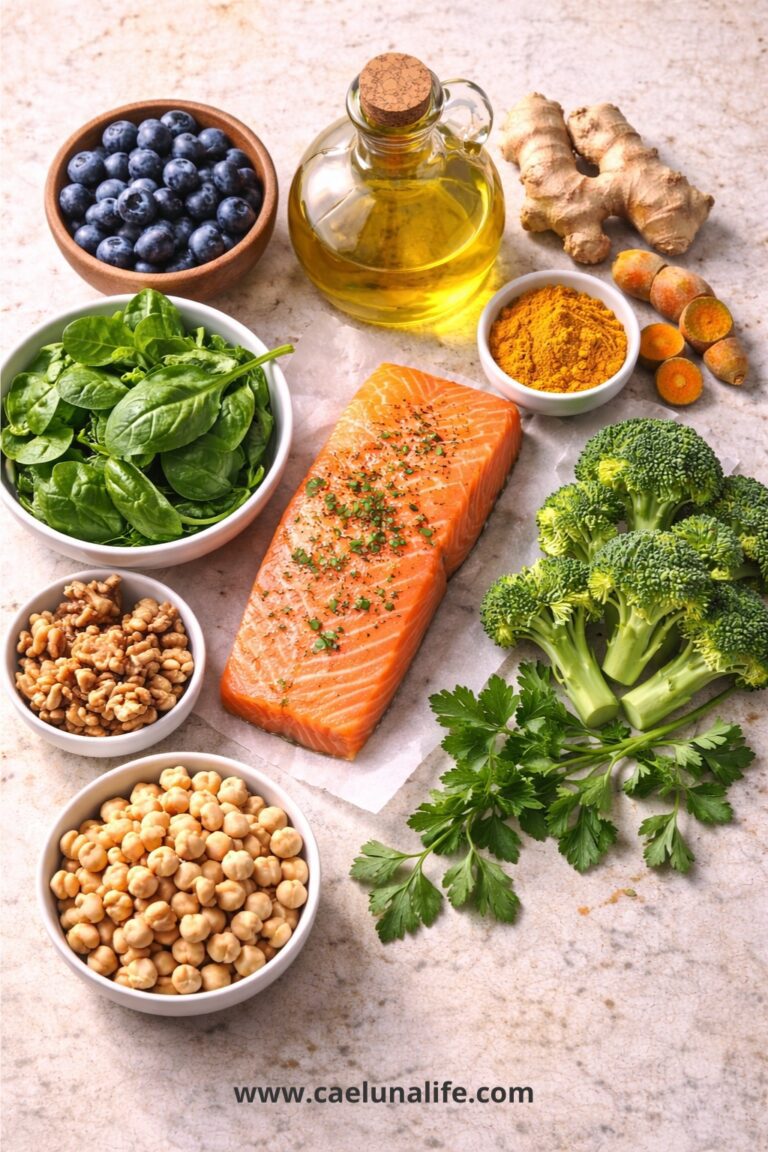
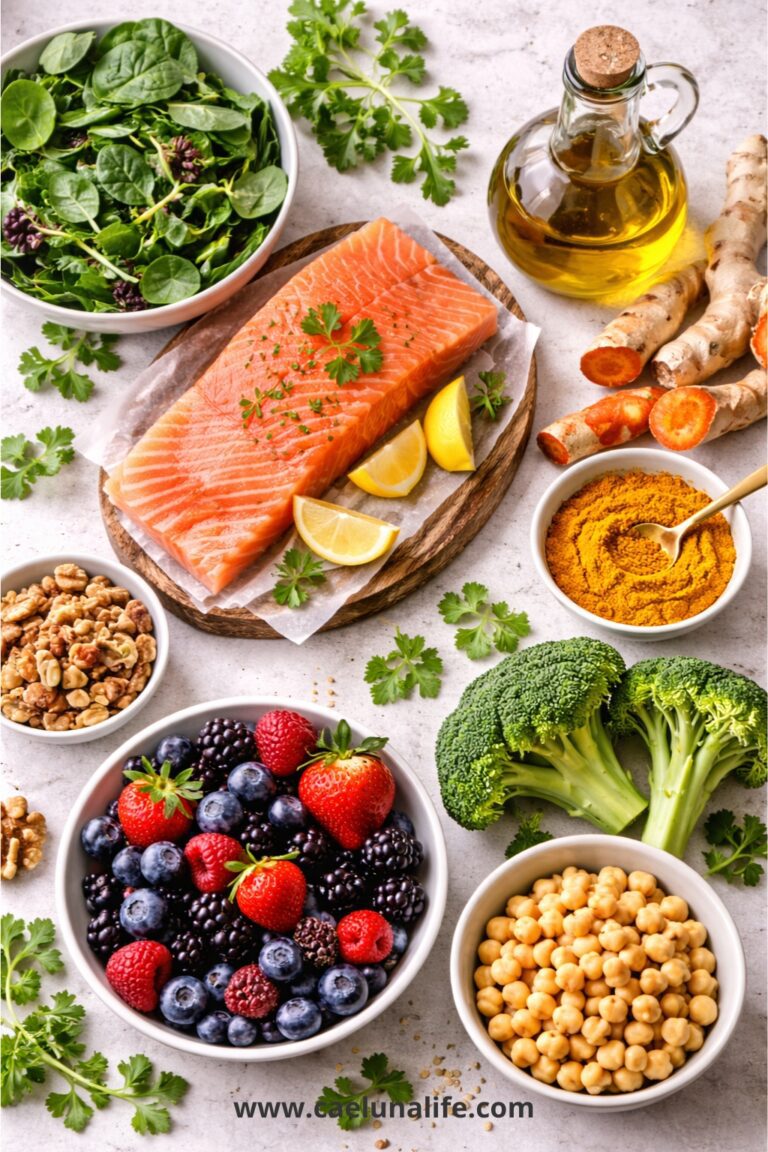
The second shift in what to eat in your 40s is a deliberate, consistent increase in anti-inflammatory foods. Oestrogen’s decline removes a natural anti-inflammatory effect on the body. Chronic low-grade inflammation — which oestrogen had been suppressing — can take hold more easily. The dietary response is systematic: omega-3-rich oily fish twice a week at minimum, olive oil as the primary cooking fat, berries and leafy greens daily, turmeric and ginger used freely as seasonings.
This is not an optional supplement to what to eat in your 40s — it is central to managing cardiovascular risk, cognitive health, joint function, and the severity of perimenopausal symptoms. Research shows that women who eat the most anti-inflammatory foods in their forties have significantly better health outcomes at 60 and 70 than age-matched women who do not, independent of other lifestyle factors.
Non-Negotiable 3: More Fibre Than You Probably Eat Now
The third core shift in what to eat in your 40s is fibre — specifically the quantity and variety. Most women consume 10–15g of fibre daily. The evidence-supported target is 25–35g. The gut microbiome changes in midlife — reduced diversity, altered bacterial composition — mean that the fibre inputs it requires become more, not less, important. Fibre also plays a specific role in oestrogen metabolism through the enterohepatic circulation: adequate fibre supports healthy oestrogen clearance, which matters during the hormonal fluctuations of perimenopause.
What to eat in your 40s for fibre: ground flaxseed daily (1–2 tablespoons), legumes four to five times per week, two or more portions of vegetables at every main meal, whole grains over refined versions, and a daily portion of berries. This is a significant increase for most women and requires deliberate planning.
A Complete Day of Eating
Before Breakfast: Hydration
Before anything else in the morning, drink 400–500ml of water — ideally with a slice of lemon. Mild dehydration affects cognitive function, energy levels, and hunger signalling. After 8 hours of sleep without fluid intake, rehydration is the simplest and most impactful first step in determining what to eat in your 40s for the day.
Breakfast — to Start Strong (target: 25–30g protein)
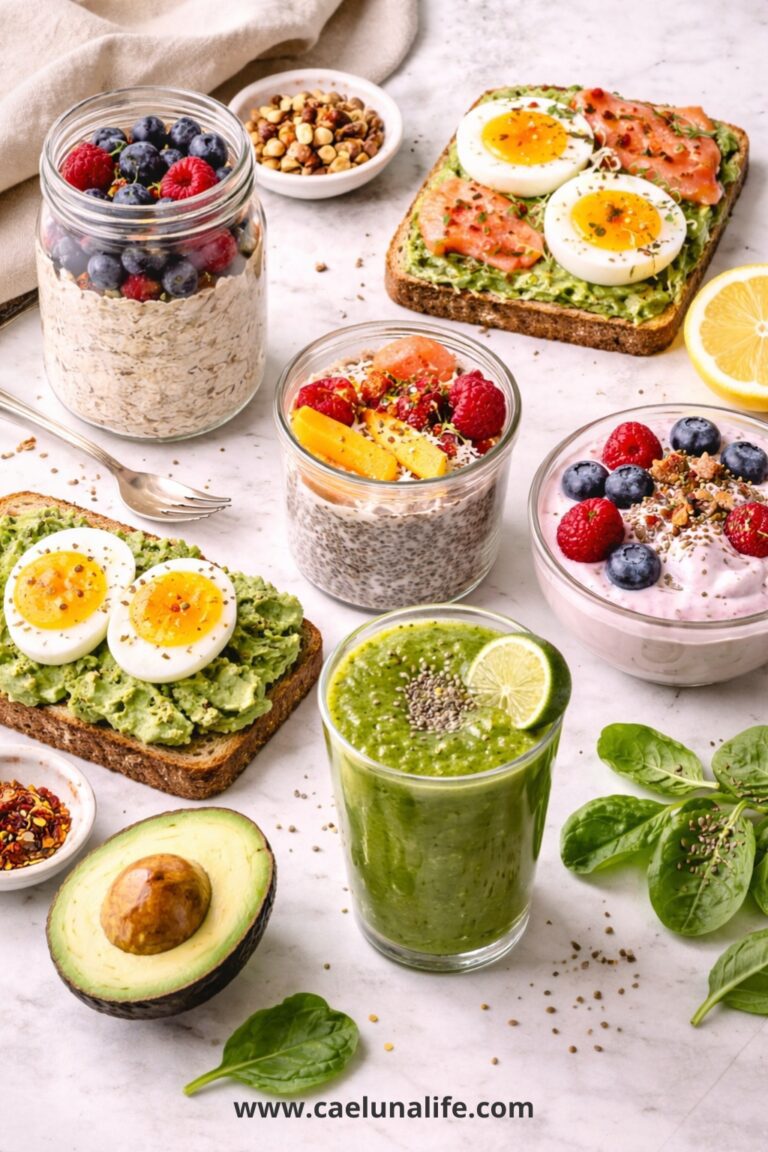
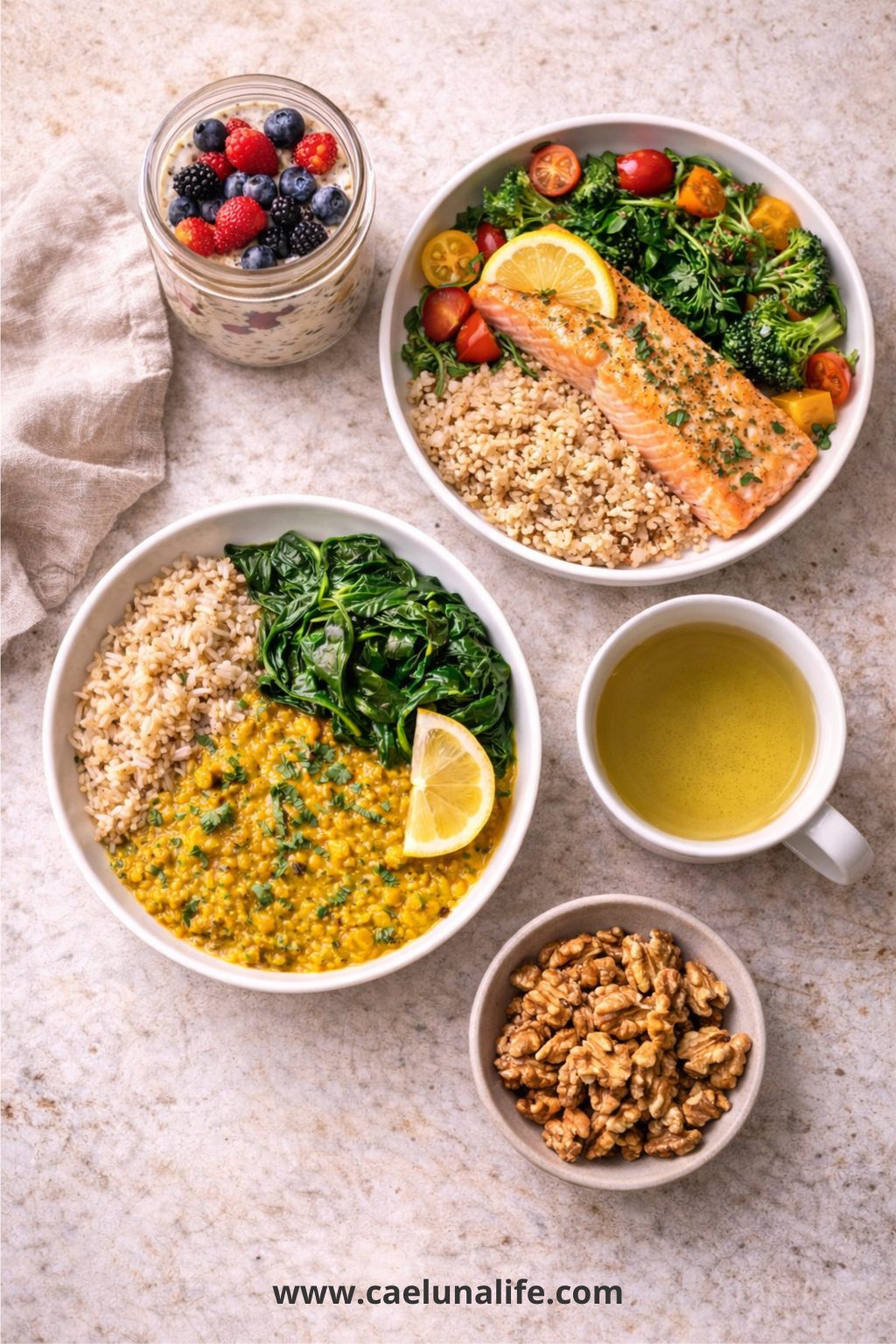
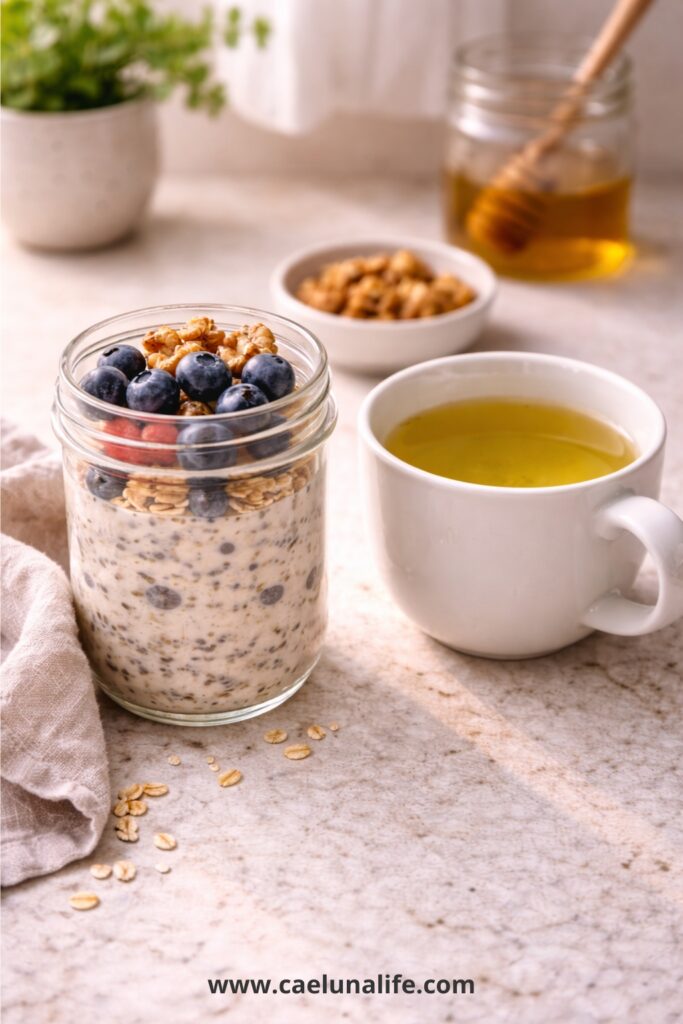
What to eat in your 40s for breakfast: overnight oats with Greek yoghurt and anti-inflammatory additions. The recipe: 40g rolled oats, 150g full-fat Greek yoghurt, a splash of oat milk, 1 tablespoon ground flaxseed (omega-3 ALA, fibre, and phytoestrogens), 1 teaspoon chia seeds, a pinch of cinnamon, and a drizzle of honey. Refrigerate overnight. Top with 80–100g frozen blueberries (thaw at room temperature while you get ready) and a small handful of walnuts (30g).
Why this is what to eat in your 40s for breakfast: Greek yoghurt provides 15–18g of protein plus calcium and probiotics. Flaxseed provides ALA omega-3s, lignans (phytoestrogens), and 3g of fibre per tablespoon. Blueberries deliver 150–250mg of anthocyanins — among the most potent anti-inflammatory polyphenols in the diet. Walnuts add ALA omega-3s and ellagitannins. Together, this breakfast hits all three nutritional non-negotiables of what to eat in your 40s.
Alternative breakfasts for what to eat in your 40s: three scrambled eggs with sautéed spinach, turmeric, black pepper, and olive oil on rye toast (28g protein, anti-inflammatory, iron-rich from spinach); smoked salmon with avocado, capers, and rye crackers (26g protein, EPA/DHA from salmon, healthy fats from avocado).
🛒 Recommended: Organic Ground Flaxseed cold-milled — omega-3s, phytoestrogens, and 3g fibre per tablespoon
Mid-Morning — What to Drink in Your 40s
Green tea between breakfast and lunch. Green tea contains EGCG — a polyphenol with consistent anti-inflammatory and metabolic benefits in research. It also provides L-theanine, which produces calm sustained focus without the anxiety that can accompany coffee. Two to three cups of green tea daily is associated with measurable reductions in CRP over 4–8 weeks. This is part of what to eat in your 40s that requires no food preparation at all.
Lunch —target: 30–35g protein
What to eat in your 40s for lunch: a salmon and quinoa bowl. The components: 150g roasted or tinned salmon, 80g cooked quinoa, a large handful of spinach or rocket, 80g roasted broccoli, half an avocado, cherry tomatoes. Dress with 2 tablespoons of extra-virgin olive oil, lemon juice, a pinch of garlic powder, and black pepper.
Why this is what to eat in your 40s for lunch: salmon provides 35g of protein plus EPA and DHA omega-3s. Quinoa adds complete protein and fibre. Spinach delivers vitamin K, magnesium, and polyphenols. Broccoli provides sulforaphane. Avocado adds oleic acid (anti-inflammatory monounsaturated fat) and potassium. Olive oil provides oleocanthal. This lunch covers all three anti-inflammatory mechanisms in one bowl.
If meal-prepped on Sunday, assembling this lunch takes under three minutes on a weekday. The convenience of what to eat in your 40s depends almost entirely on whether the components are already prepared.
Afternoon — Snack Strategy in Your 40s
What to eat in your 40s for a mid-afternoon snack: 30g walnuts and 1–2 squares of dark chocolate (70%+ cocoa). This combination takes thirty seconds to prepare and delivers ALA omega-3s from walnuts, ellagitannins that convert to urolithins in the gut, and cocoa flavanols from the dark chocolate. It satisfies the mid-afternoon craving without spiking blood sugar — the protein, fat, and fibre content slows glucose absorption and prevents the energy crash that drives poor food choices at 4pm.
Alternative snacks for what to eat in your 40s: full-fat cottage cheese with cherry tomatoes and herbs (16g protein, zero preparation); hard-boiled eggs (2 eggs = 12g protein, prepared Sunday); hummus with carrot and celery sticks (fibre, plant protein, polyphenols).
Dinner — to End the Day Well (target: 28–35g protein)
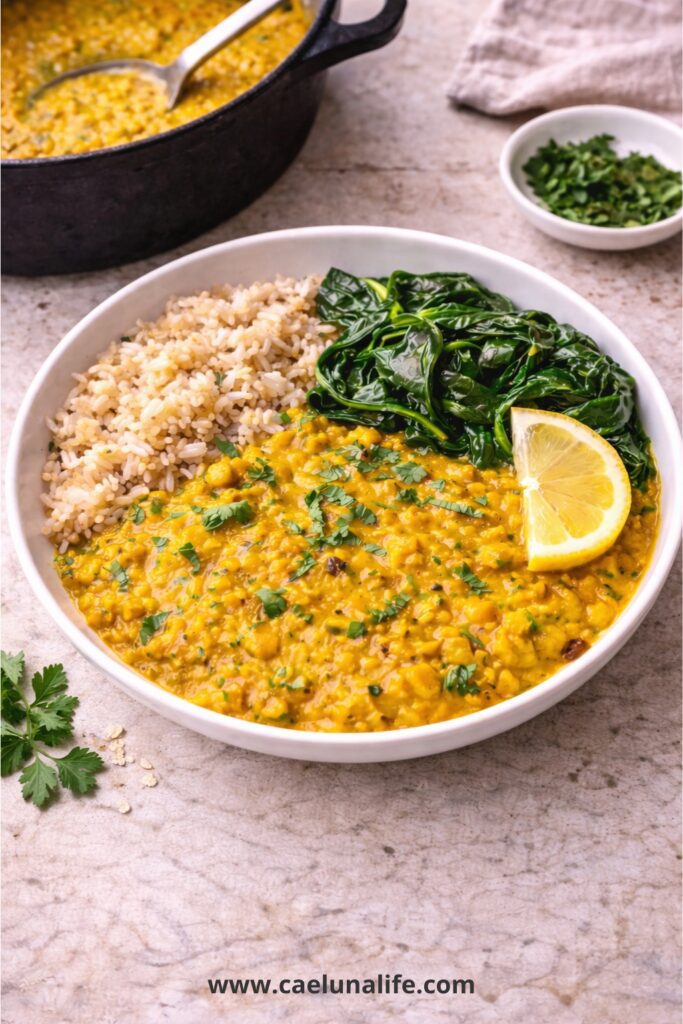
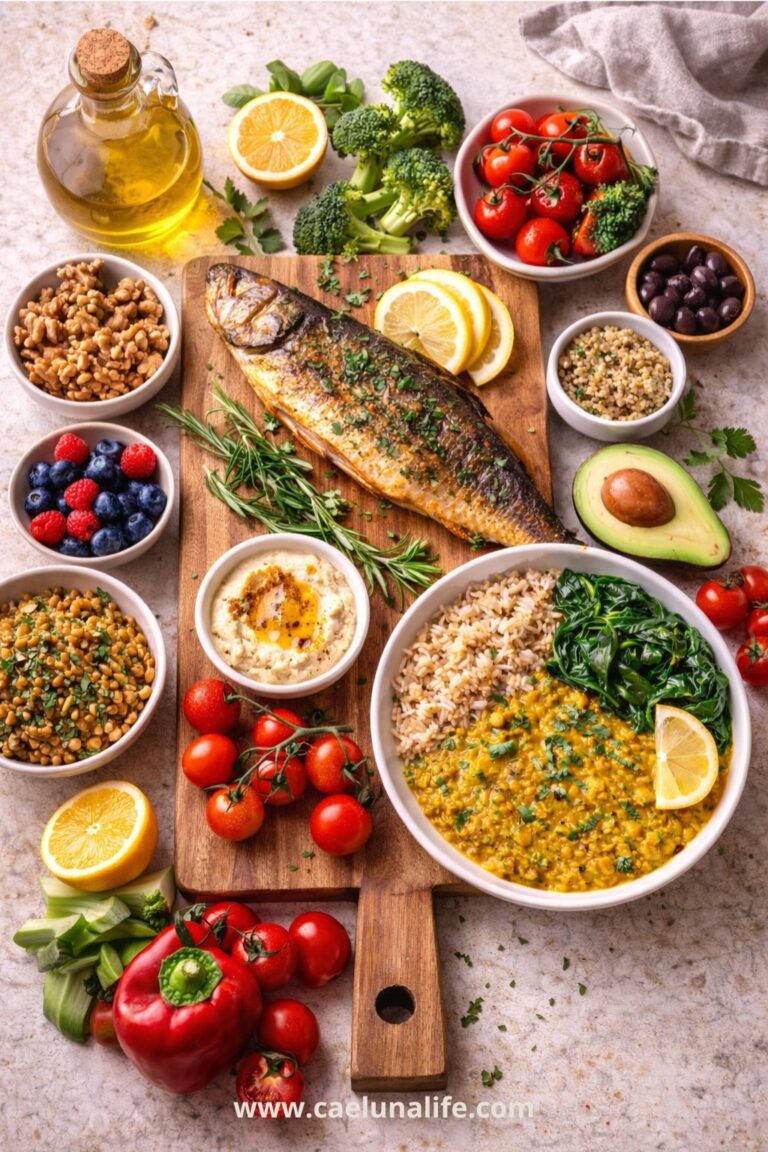
What to eat in your 40s for dinner (three to four nights per week): red lentil dal. The recipe: sauté half an onion with 2 garlic cloves, 1 teaspoon fresh grated ginger, 1 teaspoon turmeric, and half teaspoon each of cumin and coriander in 2 tablespoons olive oil. Add 150g dry red lentils, one tin of tomatoes, and 500ml vegetable stock. Simmer 20–25 minutes. Serve over brown rice with wilted spinach.
Why this is for dinner: red lentils provide 18g of plant protein per 150g dry plus 12g of fibre. Turmeric and ginger deliver anti-inflammatory curcumin and gingerol. Tomatoes provide lycopene (enhanced by olive oil cooking). Spinach adds vitamin K and magnesium. Brown rice provides complex carbohydrates and B vitamins. This dinner covers all three non-negotiables of what to eat in your 40s.
Dinner rotation for what to eat in your 40s: vary between salmon with roasted vegetables (2 nights), lentil or chickpea-based dishes (2 nights), chicken thighs with Mediterranean vegetables (1–2 nights), and one genuinely free meal per week. This pattern ensures the twice-weekly oily fish target and the four-to-five-times-weekly legume target that characterise optimal what to eat in your 40s.
Key Micronutrients to Prioritise
Beyond the macronutrient framework, several specific micronutrients deserve attention in what to eat in your 40s because of the specific biological changes of this decade:
- Calcium (1000mg/day): bone density loss accelerates after 40. What to eat in your 40s for calcium: full-fat dairy, fortified plant milks, sardines with bones, kale, tofu set with calcium sulphate
- Vitamin D (600–2000 IU/day): most women in northern climates cannot get sufficient vitamin D from food alone. A D3 + K2 supplement fills this gap in what to eat in your 40s
- Magnesium (310–320mg/day): affects sleep quality, muscle function, mood, and blood sugar regulation — many women are deficient. What to eat in your 40s for magnesium: pumpkin seeds, dark chocolate, spinach, almonds, black beans
- Iron (18mg/day if still menstruating): what to eat in your 40s for iron: red meat occasionally, lentils, spinach with vitamin C to enhance absorption, dark chocolate
- B12 (2.4mcg/day): essential for energy and neurological health — particularly important in what to eat in your 40s if plant-based. Supplement B12 if dietary intake is uncertain
- Omega-3 (EPA+DHA 500mg+ daily): from oily fish at minimum twice weekly, or supplement with algae-based DHA/EPA if plant-based
🛒 Recommended: Women’s Multi 50+ Comprehensive Daily Multi — eatures a full complement of vitamins and minerals with optimal bioavailability to support the unique dietary needs of women age 50 and older
Foods That Can Work Against You
Knowing what to eat in your 40s is also about understanding what to reduce — not eliminate, but limit, because the effects become more significant in this decade:
- Ultra-processed foods: drive gut dysbiosis and systemic inflammation — the direct opposite of what to eat in your 40s goals
- Added sugar: increases AGE formation and insulin resistance — both amplified after 40
- Alcohol: affects oestrogen metabolism, disrupts sleep quality, increases breast cancer risk, and drives inflammation — even moderate amounts are more impactful in what to eat in your 40s than at earlier life stages
- Refined carbohydrates without protein or fibre: cause blood sugar spikes that destabilise energy and increase cortisol — eating alone is the problem, not the carbohydrates themselves
Making It Sustainable
The most effective what to eat in your 40s strategy is one you maintain consistently over years, not one you follow perfectly for three weeks and abandon. Practical sustainability principles:
- Plan what to eat in your 40s on Friday, shop on Saturday, prep on Sunday — a three-day rhythm that prevents the decision fatigue that drives poor weekday choices
- Give yourself one unrestricted meal per week — rigidity is the enemy of long-term consistency in what to eat in your 40s
- Focus on adding anti-inflammatory and protein-rich foods rather than removing things — abundance mindset is more sustainable than restriction
- Keep emergency snacks available: walnuts, hard-boiled eggs, Greek yoghurt — these make what to eat in your 40s the default when time is short
- Batch-cook your protein on Sunday — this single habit makes everything else about what to eat in your 40s dramatically easier
Frequently Asked Questions About What to Eat in Your 40s
Should I eat less in my 40s to manage weight?
Reducing calories significantly is counterproductive in what to eat in your 40s. Very low calorie intake accelerates muscle loss and reduces metabolic rate — the exact opposite of the goal. What to eat in your 40s for healthy weight management: increase protein (the most satiating macronutrient), reduce ultra-processed foods, stabilise blood sugar by always pairing carbohydrates with protein and fat. These changes support healthy body composition without restriction.
Is intermittent fasting part of what to eat in your 40s?
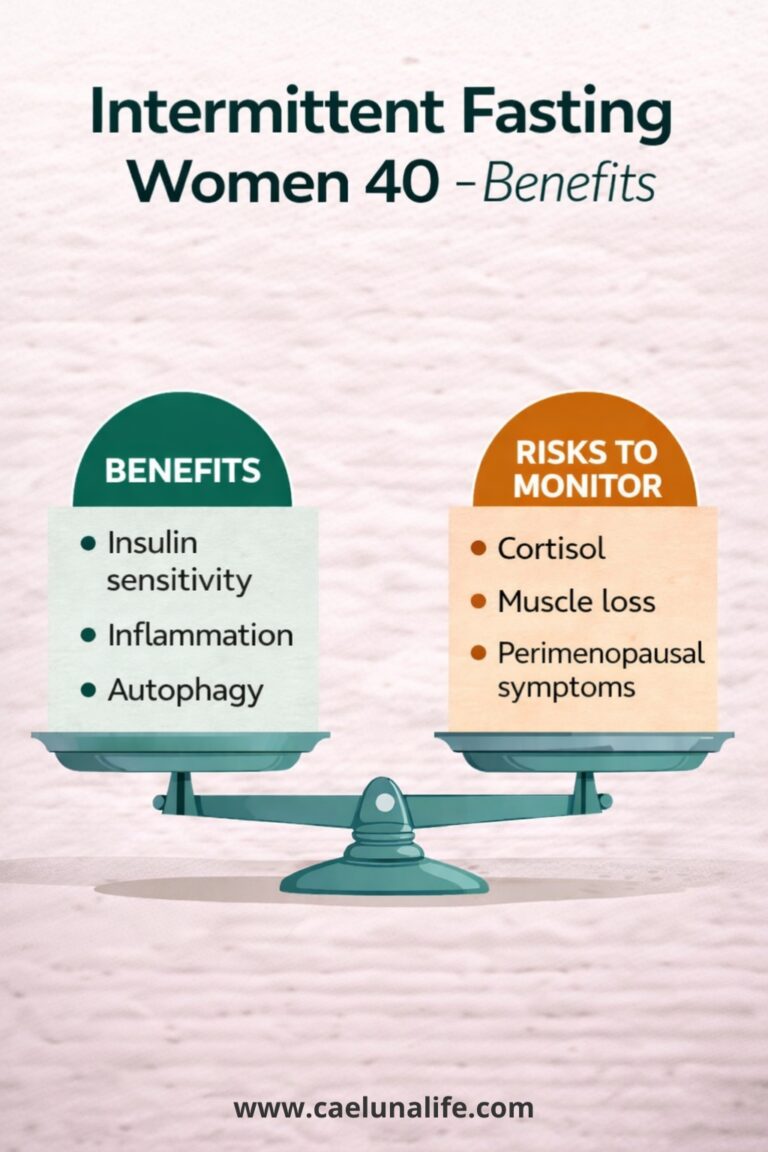
Intermittent fasting can be compatible with what to eat in your 40s for some women, but requires caution. Aggressive protocols (16:8 or longer) can increase cortisol and worsen perimenopausal symptoms in sensitive women. If you want to explore fasting in what to eat in your 40s, start with 12:12 (finishing dinner by 8pm, first meal at 8am) and monitor your sleep, energy, and hormonal symptoms carefully.
What to eat in your 40s if you follow a plant-based diet?
Plant-based what to eat in your 40s is achievable with attention to specific gaps. Protein: prioritise lentils (9g/100g cooked), tofu (8–17g), edamame (11g), and quinoa (4g). Omega-3s: flaxseed, walnuts, chia seeds for ALA, plus an algae-based DHA/EPA supplement. B12: supplement without exception. Iron: combine legumes and spinach with vitamin C-rich foods. Plant-based what to eat in your 40s is naturally high in fibre and polyphenols — advantages that partially offset the need for more deliberate protein planning.
Is dairy beneficial in what to eat in your 40s?
Full-fat dairy — Greek yoghurt, kefir, aged cheeses — fits well into what to eat in your 40s. It provides calcium (essential for bone density after 40), protein (10g per 100g for Greek yoghurt), and in fermented forms, live bacteria that support the gut microbiome. There is no evidence-based reason to avoid full-fat dairy in what to eat in your 40s for women without intolerance.
What to eat in your 40s for better sleep?
Several specific foods support sleep quality in what to eat in your 40s. Magnesium-rich foods (pumpkin seeds, dark chocolate, almonds) support GABA function and melatonin production. Tart cherry juice contains natural melatonin. Avoiding alcohol, large late meals, and high-glycaemic dinners all support sleep in what to eat in your 40s. A small evening snack of Greek yoghurt with walnuts (tryptophan plus protein for stable blood sugar overnight) can also help.
Related Articles
These guides connect directly with what you have just read:
- How to Eat Healthy After 40 — What Actually Changes and Why — The deeper science behind what to eat in your 40s and why these specific changes matter.
- Best Anti-Inflammatory Foods to Add to Your Diet After 40 — The specific anti-inflammatory foods to prioritise in what to eat in your 40s.
- The Complete Anti-Inflammatory Eating Guide for Women Over 40 — A structured framework for applying anti-inflammatory principles to what to eat in your 40s.
- High Protein Meal Prep for Women — 5 Days Ready to Go — How to prep everything you need for what to eat in your 40s in one Sunday session.
- What to Eat in a Week Healthy as a Woman Over 40 — A full seven-day plan expanding on what to eat in your 40s day by day.