
How to Weekly Meal Prep for the Whole Week in Under 2 Hours
Affiliate Disclosure: This article contains affiliate links. If you buy through our links, we may earn a small commission at no extra cost to you. We only recommend products we’d stand behind.
⚡ Quick Answer
Yes — weekly meal prep for the whole week is achievable in under 2 hours. The key is cooking proteins, grains, and vegetables simultaneously using your oven and stovetop at the same time. With a focused plan and the right containers, weekly meal prep becomes a simple Sunday habit that saves hours and supports healthier eating all week long.

Why Weekly Meal Prep Is One of the Best Habits You Can Build
If you have ever stood in front of the fridge at 7pm wondering what to eat, you already understand the problem that weekly meal prep solves. Studies consistently show that people who prepare food at home more often have higher diet quality, lower food spend, and better long-term health outcomes.
Weekly meal prep removes the daily decision entirely. When healthy food is already prepared and waiting, you eat it. When it is not, you reach for whatever is easiest — which is rarely the most nourishing option.
For women in their forties and beyond, weekly meal prep is especially valuable. Hormonal changes affect energy levels and appetite regulation, and having protein-rich, anti-inflammatory food ready at every meal makes it significantly easier to stay consistent without relying on willpower.
What You Need Before Your First Weekly Meal Prep Session
The Right Containers
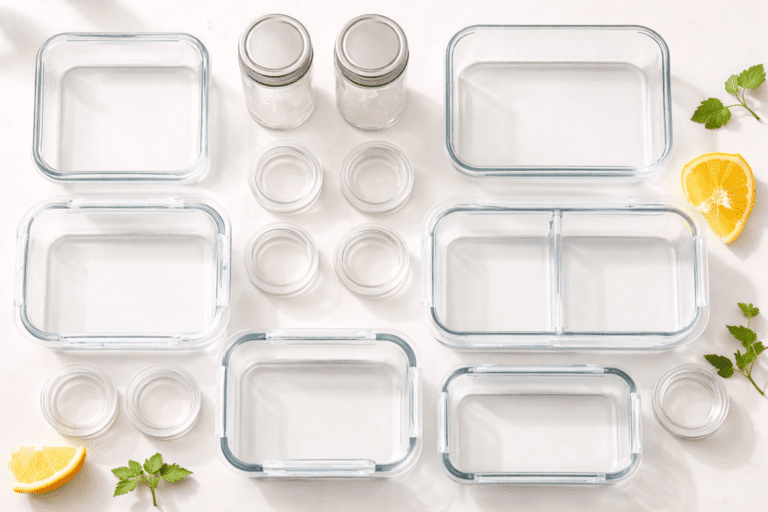
Invest in a set of glass containers with locking lids before your first weekly meal prep session. Glass does not absorb odours, is microwave and oven safe, and lasts for years. You need at least 5 main meal containers (900–1100ml) and 3 smaller ones for sauces and snacks.
🛒 Recommended: Glass Meal Prep Containers Set (10 piece) — Best all-round weekly meal prep container set — oven and microwave safe, leak-proof lids
A Simple Weekly Meal Prep Plan
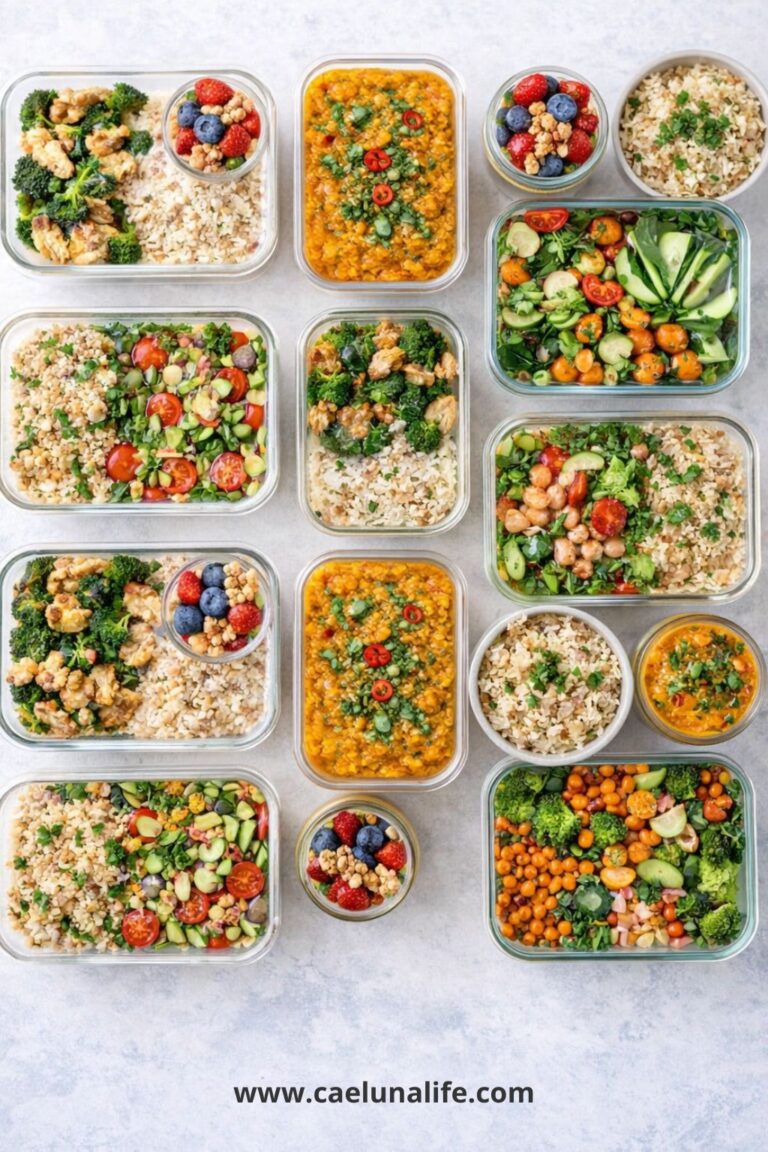
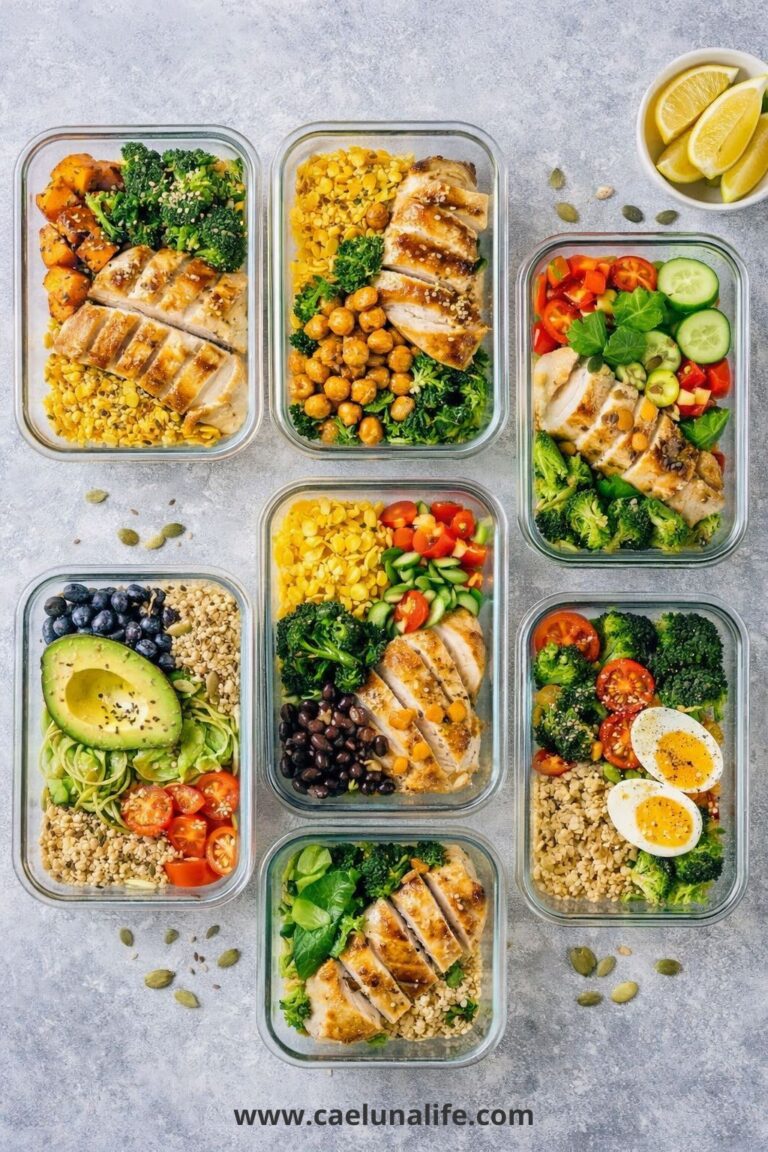
The most efficient weekly meal prep follows a component system — not individual recipes. You cook one protein, one grain, and two vegetables in bulk, then combine them differently across the week. This produces variety without extra cooking time.
Step 1: Plan Your Weekly Meal Prep Before You Shop (15 Minutes)
Before every weekly meal prep session, spend 15 minutes deciding on your base components. A good weekly meal prep plan for a full week needs only:
- One protein source — chicken thighs, salmon, lentils, or eggs
- One complex grain — brown rice, quinoa, or farro
- Two to three vegetables — choose what is seasonal and affordable
- One sauce or dressing — this creates variety across the week
From these four components, you can build bowls, wraps, salads, and stir-fries without repeating the exact same meal. This is the core logic behind efficient weekly meal prep — prep once, eat differently each day.
Before you shop, photograph your fridge and pantry. This prevents buying duplicates and helps you identify which weekly meal prep staples you already have on hand.
Step 2: Write a Focused Shopping List (10 Minutes)
A successful weekly meal prep starts at the shop, not in the kitchen. Organise your shopping list by section — produce, proteins, grains, pantry — so you move through the store efficiently without impulse-buying items that do not fit your weekly meal prep plan.
A typical weekly meal prep shopping list for one person covers:
- 600–800g protein (chicken, fish, or plant-based equivalent)
- 400g dry grain (quinoa cooks down to roughly 800g cooked)
- 4–5 cups of mixed vegetables after chopping
- Pantry staples: olive oil, lemon, garlic, your chosen spices
- Snack components: Greek yoghurt, hummus, nuts, fruit

Step 3: Set Up Your Kitchen for Efficient Weekly Meal Prep (5 Minutes)
Professional chefs call it mise en place — everything in its place before you begin. This five-minute setup before weekly meal prep saves you from running back and forth and dramatically speeds up the session:
- Preheat the oven to 200°C / 400°F
- Put a large pot of water on to boil for your grain
- Line two baking trays with parchment paper
- Set out all containers with lids nearby
- Gather your knife, cutting board, and mixing bowls
Once everything is set up, your weekly meal prep runs as a smooth sequence rather than a series of interruptions.
Step 4: Cook Everything Simultaneously (60–75 Minutes)
The secret to completing weekly meal prep in under two hours is parallel cooking — your oven, stovetop, and hands all working at the same time. This is where most beginners lose time by cooking one thing, waiting, and then cooking the next.
The Oven Does the Heavy Lifting
In weekly meal prep, the oven is your most valuable tool because it requires no attention once loaded. Season your protein and vegetables with olive oil, salt, and spices, spread across two trays, and slide into the preheated oven:
- Chicken thighs: 35–40 minutes at 200°C
- Sweet potato cubes: 35–40 minutes at 200°C
- Broccoli florets: 20–25 minutes at 200°C — add these 15 minutes after the chicken

The Stovetop Handles Your Grain
While the oven works, cook your weekly meal prep grain on the stovetop. Quinoa takes 15 minutes, brown rice 25–30 minutes. Start the rice first, then begin the quinoa halfway through if you are cooking both.
Use Your Hands-Free Time
With the oven and stovetop running, you have a 20–30 minute window for low-effort meal prep tasks:
- Hard-boil 5–6 eggs (weekly meal prep protein for snacks and salads)
- Prepare overnight oats in 5 jars for the week’s breakfasts
- Make your weekly sauce or dressing
- Wash and dry salad leaves
- Portion snacks into small containers
Step 5: Cool, Portion, and Store Your Weekly Meal Prep (20 Minutes)
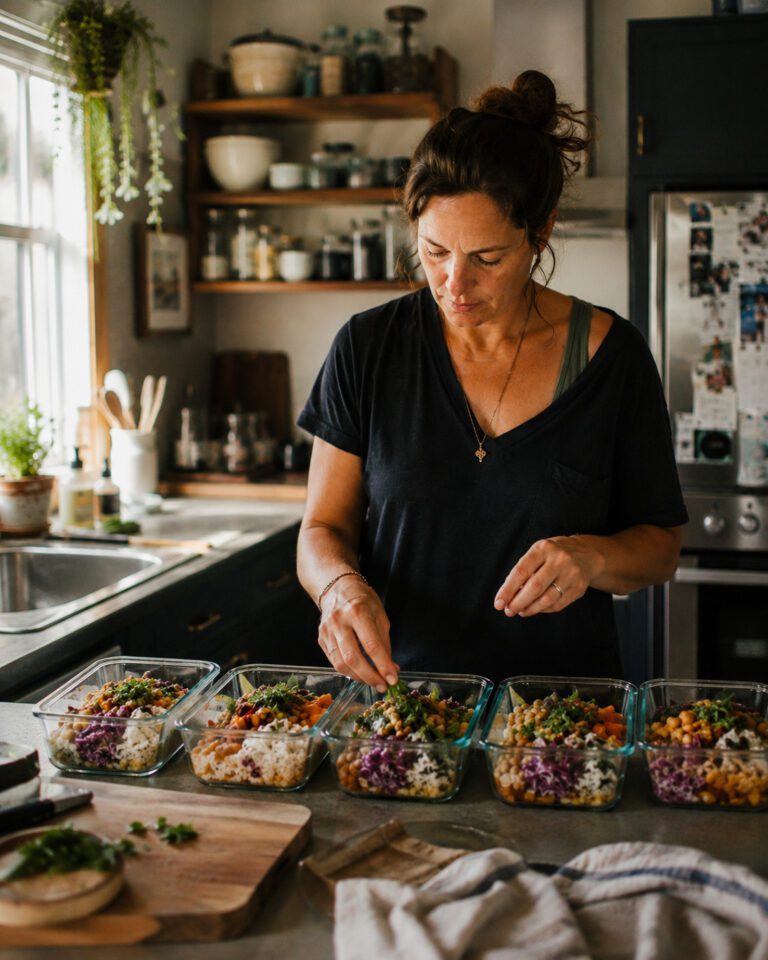
Allow everything to cool for 10–15 minutes before sealing containers — hot food creates condensation that makes meal prep go soggy faster. Then portion into containers based on your week:
- Lunches: protein + grain + vegetables combined in one container
- Dinners: store components separately so you can vary combinations each evening
- Snacks: pre-portioned yoghurt, fruit, hummus, and nuts
Label containers with the day or contents. Even a simple piece of tape with a marker saves the daily puzzle of identifying which container is which.
Meal prep storage guide: cooked proteins and grains last 4–5 days refrigerated; roasted vegetables keep for 4 days; leafy greens stay fresh longest when stored dry and separate from any dressing.
🛒 Recommended: Meal Prep Labels / Reusable Food Labels — Simple, washable labels for organising your weekly meal prep containers
Key Tips to Make Weekly Meal Prep Faster and More Effective
- Start with only three recipes in your first meal prep — simplicity builds the habit
- Double your grain batch and freeze half — this cuts 25 minutes from next week’s prep
- Keep meal prep on the same day each week — same time slot, same Sunday ritual
- Clean as you go — a sink of hot soapy water before you start makes cleanup part of the flow
- Photograph your finished meal prep — it reinforces the habit and creates Pinterest content

Frequently Asked Questions About Weekly Meal Prep
How long does meal prep actually take for beginners?
For a first meal prep session with three to four components, expect 90–120 minutes. By your fourth or fifth session, weekly meal prep typically takes 60–90 minutes as the process becomes familiar and your system is refined.
Is meal prep worth it if I live alone?
Weekly meal prep is often more valuable for solo households than for families. Cooking for one every evening is repetitive and inefficient. A Sunday weekly meal prep session provides variety all week with a single time investment.
What are the best foods for beginner meal prep?
For your first meal prep, choose forgiving foods that reheat well: chicken thighs, quinoa or brown rice, roasted sweet potato and broccoli, and hard-boiled eggs. These are hard to overcook and maintain quality over 4–5 days.
How do I stop my meal prep food from getting boring?
The component approach solves this. By storing proteins, grains, and vegetables separately, your meal prep turns into a grain bowl on Monday, a wrap on Tuesday, and a salad on Wednesday — all from the same prepped ingredients. Rotating your weekly sauce creates the most variety for the least extra effort.
Can I do meal prep if I have dietary restrictions?
Meal prep adapts easily to any dietary pattern. Gluten-free: use quinoa, rice, and sweet potato. Plant-based: swap protein for lentils, tofu, or chickpeas. Dairy-free: most weekly meal prep recipes do not rely on dairy. The component system works for all approaches.
Related Articles You Might Find Helpful
- Best Meal Prep Containers for Women in 2025 — Which glass and plastic containers actually work — tested and reviewed.
- High Protein Meal Prep for Women — How to get 25-35g protein per meal across 5 days of prepared food.
- 7 Anti-Inflammatory Meal Prep Recipes — A full week of anti-inflammatory recipes ready in one Sunday session.
- The Complete Meal Prep Guide for Beginners — Everything a complete beginner needs to start meal prepping successfully.
- Easy Meal Prep Ideas — 5 Meals, 1 Hour — The simplest possible meal prep system using sheet pan cooking and no-cook recipes.