
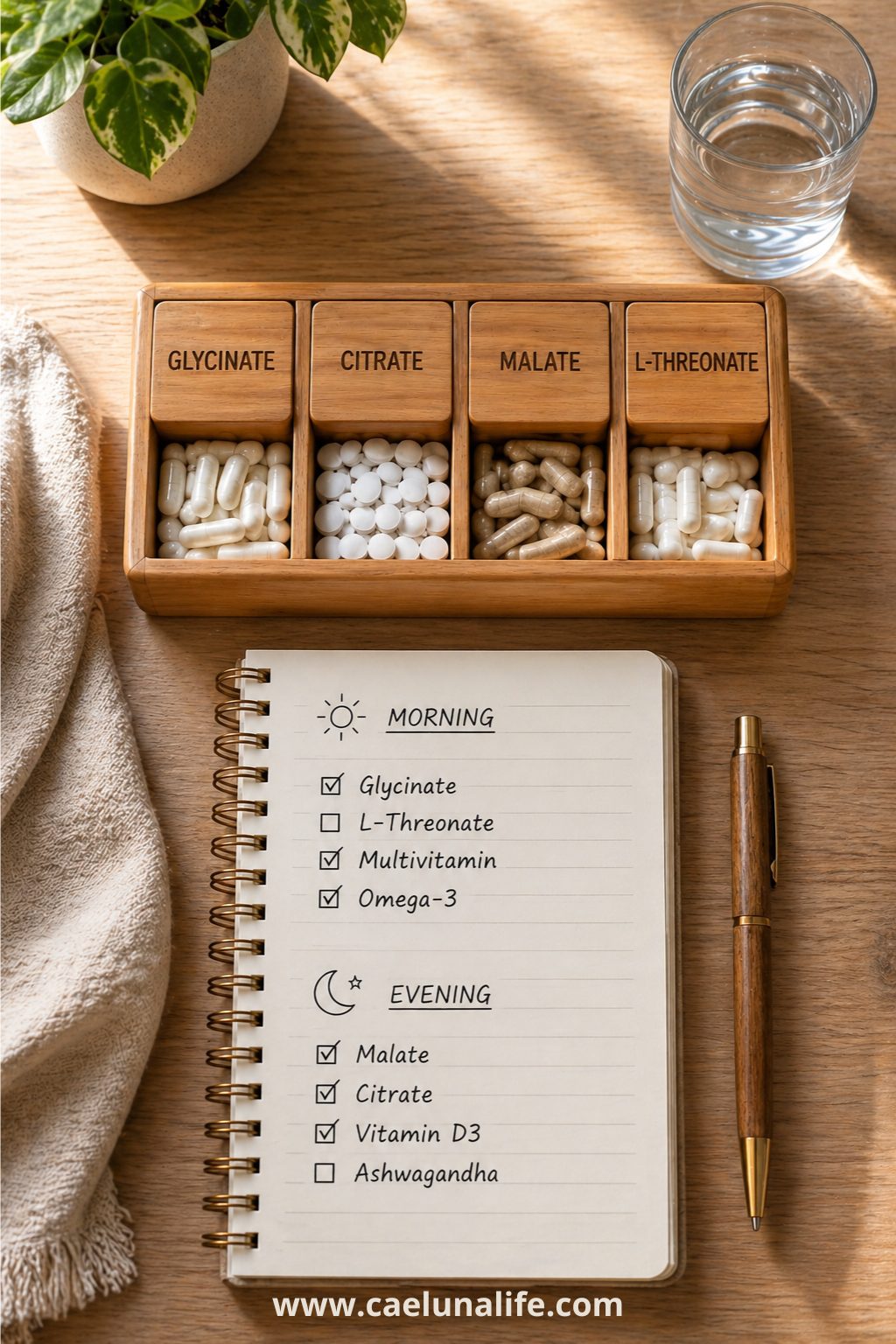
Magnesium for Women Over 40 — Which Type Works and Why
Affiliate Disclosure: This article contains affiliate links. If you buy through our links, we may earn a small commission at no extra cost to you. We only recommend products we’d stand behind.
⚡ Quick Answer
Magnesium for women over 40 is one of the most impactful and most underused supplements in midlife. The form matters more than the brand: magnesium glycinate for sleep and stress, magnesium citrate for constipation, magnesium L-threonate for cognitive support, and magnesium malate for daytime energy. Magnesium oxide — the cheapest form on the shelf — is poorly absorbed and should be avoided. The target dose of magnesium for women over 40 is 300–400 mg of elemental magnesium daily, ideally in the evening. This guide explains which type to take when, how to dose it, and why so many women feel a measurable difference within two weeks.

Why Magnesium for Women Over 40 Is a Different Question
Magnesium for women over 40 is not the same question as magnesium for a healthy twenty-year-old. The dietary and physiological demands of this decade are distinct. Between 45% and 70% of adults in industrialised countries do not meet the daily RDA of magnesium, and women over 40 face specific factors that make this gap worse: stress-driven magnesium depletion, declining oestrogen’s effect on magnesium retention, increased caffeine and alcohol intake typical of this life stage, and agricultural soils that contain dramatically less magnesium than they did fifty years ago.
A meta-analysis published in *Nutrients* (2020) estimated that mean dietary magnesium intake in women aged 40–60 in Europe and the US sits at roughly 240–270 mg per day — well below the 310–320 mg RDA and substantially below the 400 mg associated with optimal cardiovascular and metabolic outcomes. The clinical consequences of that gap are quietly significant. Chronic low-grade magnesium insufficiency is associated with poor sleep, elevated blood pressure, insulin resistance, increased migraine frequency, muscle cramps, restless legs, anxiety, and reduced bone mineralisation — a list that maps almost perfectly onto the symptoms women begin describing in their forties.
Magnesium for women over 40 therefore deserves a place near the top of any practical supplement stack. The mineral is involved in over 300 enzymatic reactions, including ATP production (energy), protein synthesis (muscle), GABA receptor function (sleep and calm), parathyroid hormone regulation (bone turnover), and vascular smooth muscle relaxation (blood pressure and migraine). In short: the things that start to feel harder in the forties are exactly the things magnesium underpins.
Understanding magnesium for women over 40 is not about chasing a trend. It is about addressing a depletion that is nearly universal in this age group and surprisingly easy to fix once you choose the correct form and dose.
The Core Principles Behind Magnesium for Women Over 40
Principle 1: Form Determines Effect
This is the single most important rule when choosing magnesium for women over 40. The mineral itself is the same element in every product, but the compound it is bound to changes absorption, tissue distribution, and clinical effect dramatically. Magnesium glycinate reaches the brain and nervous system efficiently. Magnesium L-threonate crosses the blood-brain barrier particularly well. Magnesium citrate has a mild laxative effect. Magnesium oxide is roughly 4% absorbed — which is why the cheap “magnesium” bottle at the pharmacy often does very little. Always check the specific form on the label before buying magnesium for women over 40.
Principle 2: Serum Magnesium Is a Poor Test
When women ask for “a magnesium test” at their annual check-up, they usually get a serum magnesium reading. Serum magnesium is a tightly regulated fraction — it represents less than 1% of total body magnesium — and the body will strip magnesium from bones and tissues to keep serum magnesium in range. This means you can be meaningfully magnesium-deficient at the tissue level while showing a “normal” serum reading. A better test is RBC (red blood cell) magnesium, which reflects intracellular stores. For any serious conversation about magnesium for women over 40, insist on RBC magnesium — not serum — as the baseline marker.
Principle 3: Magnesium for Women Over 40 Is Taken with Food and Often with Calcium
Magnesium absorption improves when taken with a meal. The opposite of what some older advice suggested: taking magnesium on an empty stomach at bedtime is not optimal. It works better taken with dinner or a small evening snack. Calcium and magnesium are sometimes taken together, and that is fine — competitive absorption becomes an issue only at very high doses of both (over 1,000 mg each). For practical purposes, take your magnesium for women over 40 with the evening meal, unless you are using magnesium malate, in which case morning is preferable.
Principle 4: Start Low, Titrate Up
Magnesium is one of the safer supplements at standard doses, but excessive intake does cause a specific and unpleasant side effect: loose stools. For women new to magnesium for women over 40, starting at 200 mg elemental and titrating up by 100 mg weekly until reaching 300–400 mg prevents the gastrointestinal surprise. If you encounter loose stools, drop the dose by 100 mg and try splitting it between morning and evening.
Magnesium for Women Over 40 — A Complete Guide to the Forms
Magnesium Glycinate (Bisglycinate) — The Default Choice
If you were to pick one single form of magnesium for women over 40 to start with, it would be magnesium glycinate. Glycinate is chelated to the amino acid glycine, which does two useful things: it dramatically improves absorption (studies suggest 60–80% bioavailability versus 4% for oxide), and it provides a calming effect of its own — glycine is a minor inhibitory neurotransmitter. This makes magnesium glycinate uniquely good for sleep quality, anxiety reduction, and evening wind-down.
The clinical evidence for magnesium glycinate in this context is robust. Randomised trials in peri- and early-postmenopausal women have shown meaningful improvements in sleep onset, sleep quality, morning cortisol patterns, and self-reported anxiety scores within four to six weeks of supplementation. For a woman in her forties dealing with the classic constellation of 3 am wake-ups, a racing mind at bedtime, and morning fatigue, magnesium for women over 40 in the glycinate form is often the single most impactful first intervention.
Best for: sleep, anxiety, stress, general daily use Dose: 300–400 mg elemental magnesium in the evening Format: capsules (check that the label lists *elemental* magnesium, not just the compound weight)
Magnesium Citrate — When You Also Need Digestive Help
Magnesium citrate is magnesium bound to citric acid. It is well-absorbed (roughly 30–40% bioavailability), inexpensive, and has a reliable, mild laxative effect via osmotic action in the bowel. For women over 40 dealing with both magnesium insufficiency and sluggish digestion — a combination more common than people realise, particularly in the perimenopausal window — magnesium citrate offers a genuine two-for-one. It is also the form most often used in high-dose clinical settings for migraine prevention.
The caveat: the laxative effect means magnesium citrate is not the right choice if your bowels are already regular or tend loose. In that case, stay with magnesium glycinate and address digestion separately. Magnesium for women over 40 in the citrate form sits firmly in the “use if indicated” column rather than the “default daily” column.
Best for: constipation alongside magnesium deficiency, migraine prevention at clinical doses Dose: 200–400 mg elemental magnesium; split across morning and evening if over 300 mg Format: powder (often better-tolerated than capsules) or capsules
Magnesium L-Threonate — The Brain-Specific Form
Magnesium L-threonate is a newer, more expensive, and more specialised form. Its unique property is efficient crossing of the blood-brain barrier, resulting in higher brain magnesium concentrations than other forms achieve at equivalent doses. Research — still limited but growing — suggests specific benefit for cognitive performance, memory consolidation, and possibly mood support. For magnesium for women over 40 whose primary concerns are brain fog, age-related memory complaints, or cognitive decline risk (family history of dementia), L-threonate is worth the premium price.
It is not a full replacement for glycinate — the brain-specific uptake does not address systemic magnesium needs as efficiently. Some women take glycinate in the evening and L-threonate in the morning as a layered approach. For a minimalist routine, glycinate alone is sufficient.
Best for: cognitive support, brain fog, memory, possibly mood in specific contexts Dose: 144 mg elemental magnesium (approximately 2 g of magnesium L-threonate), typically split morning and early afternoon Format: capsules (Magtein-branded is the most-researched source)
Magnesium Malate — For Daytime Energy
Magnesium malate is bound to malic acid, a Krebs cycle intermediate. The combination has been studied specifically in the context of fibromyalgia, chronic fatigue, and muscle pain, with modestly positive results. For magnesium for women over 40 whose primary complaint is daytime energy rather than sleep, malate can be taken in the morning instead of glycinate. Some women report a more “awake” feeling with malate versus the calming effect of glycinate.
Best for: daytime energy, fibromyalgia, chronic muscle pain Dose: 300–400 mg elemental magnesium in the morning Format: capsules
Magnesium Taurate — Cardiovascular Specific
Magnesium bound to the amino acid taurine has preliminary evidence for cardiovascular benefit specifically, including modest blood pressure effect and possibly cardiac arrhythmia support. Taurate is less widely studied than glycinate or citrate but is a reasonable choice for magnesium for women over 40 with cardiovascular history or hypertension. The evidence base is not yet robust enough to recommend it over glycinate for most women.
Best for: cardiovascular support (hypertension, arrhythmia) Dose: 300–400 mg elemental magnesium, split across the day Format: capsules
Magnesium Oxide — The One to Avoid
Magnesium oxide is the cheapest and most common form on pharmacy shelves. It is roughly 4% absorbed, meaning a 400 mg capsule delivers approximately 16 mg of usable magnesium. It is adequate only for one purpose: short-term laxative use. For any woman considering magnesium for women over 40 as a nutritional supplement, magnesium oxide is not the right choice. If the bottle simply says “magnesium” with no further specification, assume it is oxide and put it back.
Topical Magnesium — A Supporting Role
Magnesium oil sprays and Epsom salt baths deliver a small, hard-to-quantify amount of magnesium through the skin. The absolute amount absorbed is unlikely to correct a dietary deficiency, but for local muscle soreness, evening wind-down rituals, or as an add-on to oral supplementation, topical magnesium has a reasonable role. Think of it as comfort rather than correction. For serious magnesium for women over 40 strategy, oral is the primary delivery route.
🛒 Recommended: Magnesium Glycinate 400mg — Third-Party Tested, 180 Capsules — The starting-point form of magnesium for women over 40 for sleep, stress, and everyday nutrition.
Why Magnesium for Women Over 40 Affects Sleep Specifically
The most common reason women in their forties start taking magnesium for women over 40 is sleep. The mechanism is worth understanding, because it explains both why magnesium often helps and why it sometimes does not.
Magnesium is a natural NMDA receptor antagonist and a GABA receptor agonist. In plain terms: it calms excitatory neurotransmission and supports the calming, inhibitory system that allows the brain to wind down. It also plays a role in melatonin regulation and in the nocturnal pattern of cortisol. In perimenopausal women, the classic “wired but tired” feeling — lying awake at 3 am with a racing mind — often reflects a combination of disrupted GABA function, fluctuating cortisol, and declining progesterone (which itself supports sleep). Magnesium for women over 40 addresses the first of those three directly and supports the third indirectly.
That said, magnesium is not a sleeping pill. It is a foundational nutrient that supports the systems required for good sleep. If magnesium alone is not fixing sleep in your case, the issue is not that magnesium does not work — it is that other factors (late caffeine, alcohol, elevated cortisol from stress, undiagnosed sleep apnoea, untreated perimenopause) also need attention. Magnesium for women over 40 lays the groundwork. Sometimes it is enough. Sometimes it is one of three or four simultaneous interventions required.
Magnesium for Women Over 40 and Bone Health
After sleep and stress, the second strongest case for magnesium for women over 40 is bone health. Roughly 60% of the body’s magnesium is stored in bone. Magnesium is essential for the conversion of vitamin D to its active form, for the function of parathyroid hormone (which regulates bone turnover), and for the incorporation of calcium into the bone matrix. Women supplementing calcium and vitamin D without adequate magnesium often see suboptimal results — the bone pathway is bottlenecked at the magnesium-dependent steps.
This is why current geriatric and endocrinology consensus statements increasingly recommend assessing magnesium status in any bone health conversation over forty. Magnesium for women over 40 is not just a sleep supplement — it is part of the bone-preservation toolkit alongside calcium, vitamin D, vitamin K2, and resistance training.
Magnesium for Women Over 40 and Blood Sugar
A less-discussed but clinically important domain is insulin sensitivity. Low magnesium status is associated with insulin resistance and increased risk of type 2 diabetes in prospective cohort studies. Supplementation in people with metabolic syndrome or pre-diabetes has shown modest but real improvements in fasting glucose, fasting insulin, and HbA1c over twelve to sixteen weeks. For a woman in her forties noticing increasing central adiposity, afternoon energy crashes, or rising fasting glucose, magnesium for women over 40 is part of the first-line intervention alongside dietary and exercise changes.
Magnesium for Women Over 40 and Blood Pressure
Magnesium has a modest but consistent effect on blood pressure — roughly a 2–4 mmHg reduction in systolic BP at daily doses of 300–500 mg elemental across multiple meta-analyses. This is not on its own a treatment for hypertension, but it is a meaningful addition to a lifestyle-based blood pressure strategy in women whose readings are creeping upward in midlife. If blood pressure is a primary concern, consider magnesium taurate or citrate rather than glycinate.

Dietary Magnesium — Food First for Magnesium for Women Over 40
Supplementation is the backstop, not the starting point. Women who focus on magnesium for women over 40 but ignore dietary sources end up paying for supplements while leaving easy wins on the table. The top food sources of magnesium, ranked by density:
- Pumpkin seeds — 156 mg per 30g (one of the highest food sources)
- Dark chocolate (85%+ cocoa) — 65 mg per 30g
- Almonds — 76 mg per 30g
- Spinach (cooked) — 78 mg per 100g
- Black beans — 60 mg per 100g cooked
- Brazil nuts — 106 mg per 30g
- Chia seeds — 95 mg per 30g
- Cashews — 73 mg per 30g
- Avocado — 29 mg per medium avocado
- Brown rice (cooked) — 44 mg per 100g
- Tofu — 53 mg per 100g
A handful of pumpkin seeds, a square of dark chocolate, and a spinach-rich salad can deliver 250 mg of magnesium on their own. Magnesium for women over 40 absolutely works better when food and supplementation work together rather than relying on pills alone.
Key Micronutrients to Pair with Magnesium for Women Over 40
Magnesium does not work in isolation. The most important companions:
- Vitamin D3: Magnesium is required for vitamin D activation. Low magnesium compromises vitamin D metabolism. Supplement both, particularly in winter.
- Vitamin B6 (P-5-P form): Supports magnesium’s entry into cells and shares many nervous-system functions. Many magnesium glycinate formulas now include B6 for this reason.
- Vitamin K2 (MK-7): Directs calcium appropriately. The bone and cardiovascular benefits of magnesium are amplified when vitamin K2 is adequate.
- Potassium: Electrolyte balance. Dietary potassium (leafy greens, potatoes, beans) paired with magnesium supports blood pressure and muscle function together.
- Taurine: The amino acid in magnesium taurate has its own effects on cardiovascular and nervous system function. A separate taurine supplement (1–3 g daily) is worth considering for cardiovascular-focused women over 40.
Magnesium for Women Over 40 — Practical Routines and Real-World Troubleshooting
A well-designed approach to magnesium for women over 40 goes beyond picking the right bottle. It accounts for real life: irregular evenings, travel, occasional alcohol, shifting stress levels, and the tendency of routines to drift after the initial enthusiasm wears off. Several practical patterns that women in this decade have used successfully:
- The habit-stacked evening dose. Attach magnesium for women over 40 to something you already do every evening — brushing teeth, taking contact lenses out, turning off the kitchen lights. Habit-stacking is the strongest predictor of long-term supplement compliance across the behavioural literature.
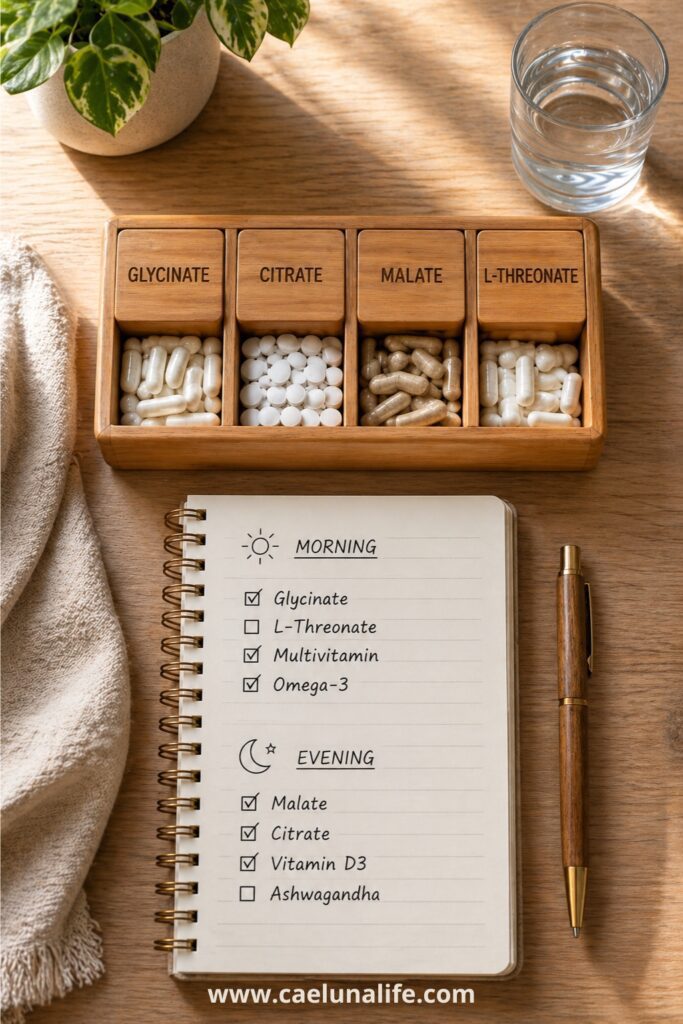
- The Sunday refill ritual. Use a weekly pill organiser and refill it every Sunday while making a cup of tea. This single small routine eliminates the decision of whether to take magnesium each night and removes about 80% of missed doses.
- The “travel pouch” principle. Keep a second small bottle of magnesium glycinate in your toiletry bag permanently. The most common reason women miss magnesium for women over 40 is travel and hotel stays — having a dedicated travel supply solves this entirely.
- The alcohol-compensating dose. Alcohol increases urinary magnesium excretion. On nights with a glass or two of wine, some women take an extra 100 mg magnesium glycinate at bedtime to offset the depletion and reduce the 3 am wake-up that alcohol commonly triggers. This is not a licence to drink more — it is a practical acknowledgement that real life includes occasional wine.
- The stress-period escalation. During unusually high-stress periods (work deadlines, family crises, grief), magnesium requirements increase. Temporarily raising magnesium for women over 40 by 100–150 mg during these phases can meaningfully reduce the stress-related symptoms that otherwise compound.
- Retesting every six months. Run RBC magnesium annually or bi-annually, particularly in the first two years of supplementation. This confirms the dose is actually moving the marker and gives you objective feedback beyond subjective symptoms.
Frequently Asked Questions About Magnesium for Women Over 40
How quickly does magnesium for women over 40 start to work?
Depending on what symptom you are tracking, timelines vary. Sleep quality often improves within 7–14 days of consistent evening dosing. Anxiety reduction and general stress tolerance: 2–4 weeks. Muscle cramps and restless legs: often within a week. Migraine frequency: 8–12 weeks. Blood pressure effect: 6–12 weeks. Bone health and metabolic markers: 3–6 months and only measurable on retesting. If you are not noticing any effect after four weeks on an appropriate dose and form, reassess: either the form is wrong (probably oxide), the dose is too low, or magnesium is not the missing piece for your specific symptoms.
Can I take too much magnesium for women over 40?
For most women with healthy kidneys, oral magnesium has a wide safety margin. The upper safe daily limit in the form of supplements is 350 mg elemental magnesium set by US regulatory bodies, though clinical doses regularly exceed this without ill effect. The main side effect of excess is loose stools. Women with kidney disease should not supplement magnesium without medical supervision — impaired kidney clearance can allow levels to rise into a toxic range. For healthy women, erring on the side of more dietary magnesium and a moderate supplement dose (300–400 mg elemental) is both safe and effective.
What is the best time to take magnesium for women over 40?
For magnesium glycinate, citrate, or taurate, evening (with dinner or within an hour of bed) is best, particularly if sleep is a concern. For magnesium malate, morning is preferable because of its energising effect. For magnesium L-threonate, split between morning and early afternoon; late-day dosing can feel mildly stimulating for some women. Taking magnesium for women over 40 with food improves absorption modestly and reduces any mild gastrointestinal effects.
Does magnesium for women over 40 interact with medications?
Yes, in a few specific cases. Magnesium can reduce absorption of certain antibiotics (tetracyclines, fluoroquinolones) and bisphosphonate osteoporosis drugs — take these at least two hours apart from magnesium. Magnesium can amplify the effect of blood pressure medications and diuretics, so monitor BP if you are taking both. Magnesium is generally safe with common perimenopause-related prescriptions (SSRIs, HRT, thyroid medication) but separate thyroid medication by at least four hours to protect absorption. Always review your medication list with a pharmacist before starting any substantial supplement.
Should I take magnesium for women over 40 every day or cycle it?
Continuous daily use is appropriate and evidence-based. There is no need to cycle magnesium the way some other supplements benefit from on-off patterns. Think of magnesium for women over 40 as ongoing nutritional support rather than a pulsed medication. Many women take it daily for years with no issue and meaningful sustained benefit.
Can magnesium for women over 40 replace HRT for perimenopausal symptoms?
No. Magnesium supports several systems that are affected during perimenopause — sleep, mood, muscle function, bone turnover — but it is not a hormone and does not address the underlying hormonal decline. For women with moderate to severe perimenopausal symptoms, discuss hormone therapy with a qualified clinician. Magnesium for women over 40 is a legitimate and useful adjunct, but it is a complement, not a substitute.
Related Articles
These guides connect directly with what you have just read:
- Best Supplements for Women Over 40 — What Actually Works — The complete supplement framework into which magnesium for women over 40 fits.
- How to Sleep Better During Perimenopause — What Actually Helps — The sleep angle where magnesium for women over 40 often has the biggest immediate impact.
- Supplements for Perimenopause — What Helps and What Is Just Hype — Where magnesium sits in a full perimenopause supplement plan.
- Best Vitamin D3 + K2 Supplements for Women — Tested and Compared — The D3/K2 pairing that magnesium for women over 40 works alongside.
- My Daily Supplement Routine at 44 — What I Take and Exactly Why — A realistic morning-to-evening routine including magnesium for women over 40.